Just days after Diwali, when families rushed to buy gold and silver at record-high prices, something shocking happened. Since then, prices have kept falling.
💥 Gold is down about 10%
💥Silver is down 8–17% from their all-time highs.
you might be unsure what to do next with your gold and silver investments.
Should you buy more?
Should you sell them?
Will prices rise again?
Or are they about to crash?
Don’t worry — we’ve done the complete research and will guide you on whether you should buy gold or silver, or avoid them completely.
The Diwali Fireworks: When Gold and Silver Stole the Show
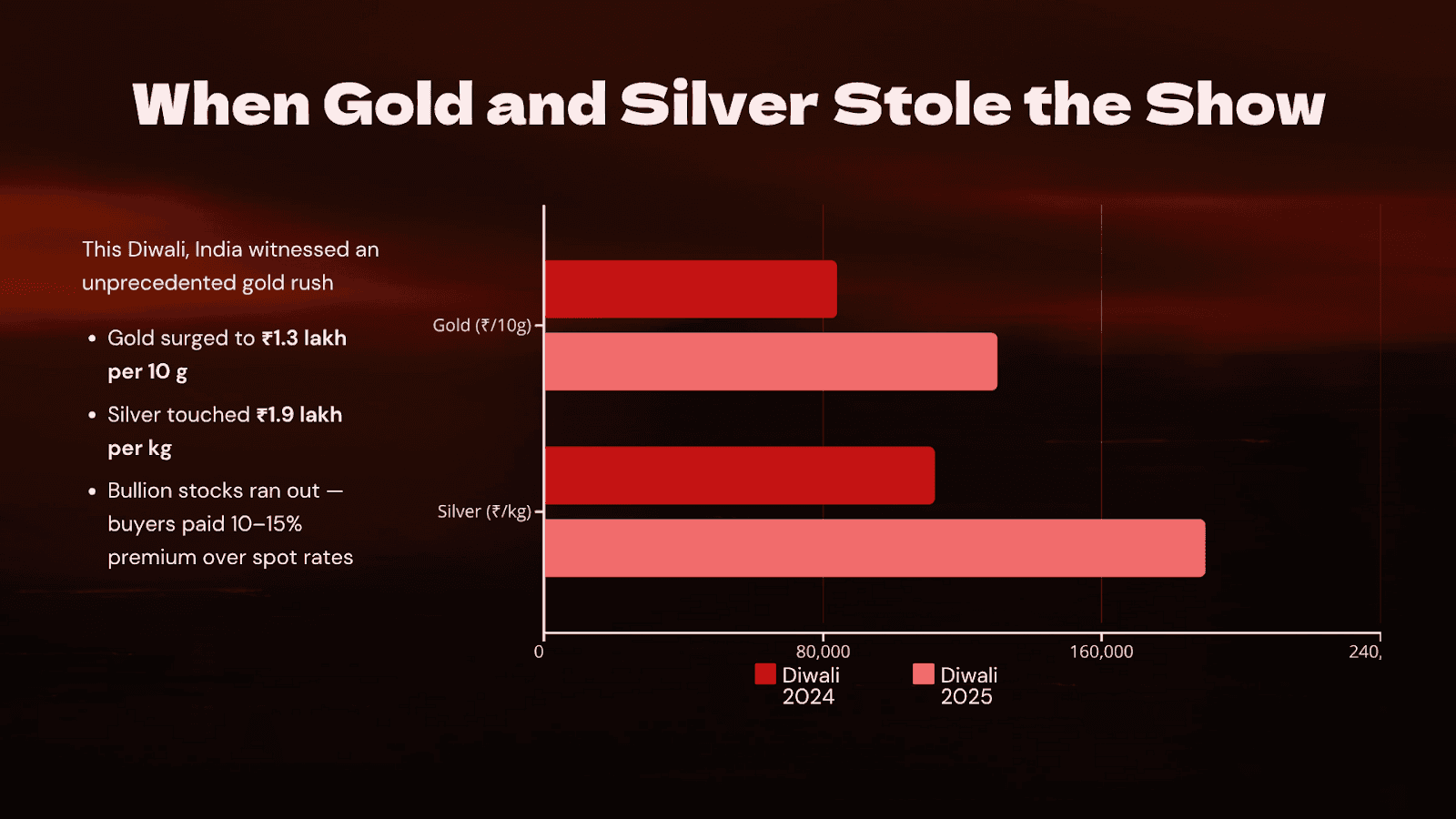
This Diwali, jewellery stores across cities overflowed with customers. Despite record prices, families queued up with the same enthusiasm as always. Gold touched ₹1.3 lakh per 10 grams, and silver crossed ₹1.9 lakh per kilo. In several places, gold and silver bullion were out of stock, and people were paying a 10–15% premium to buy.
For a few dazzling weeks, it seemed like gold and silver were the next big investments and nothing could go wrong. The data supported that optimism too:
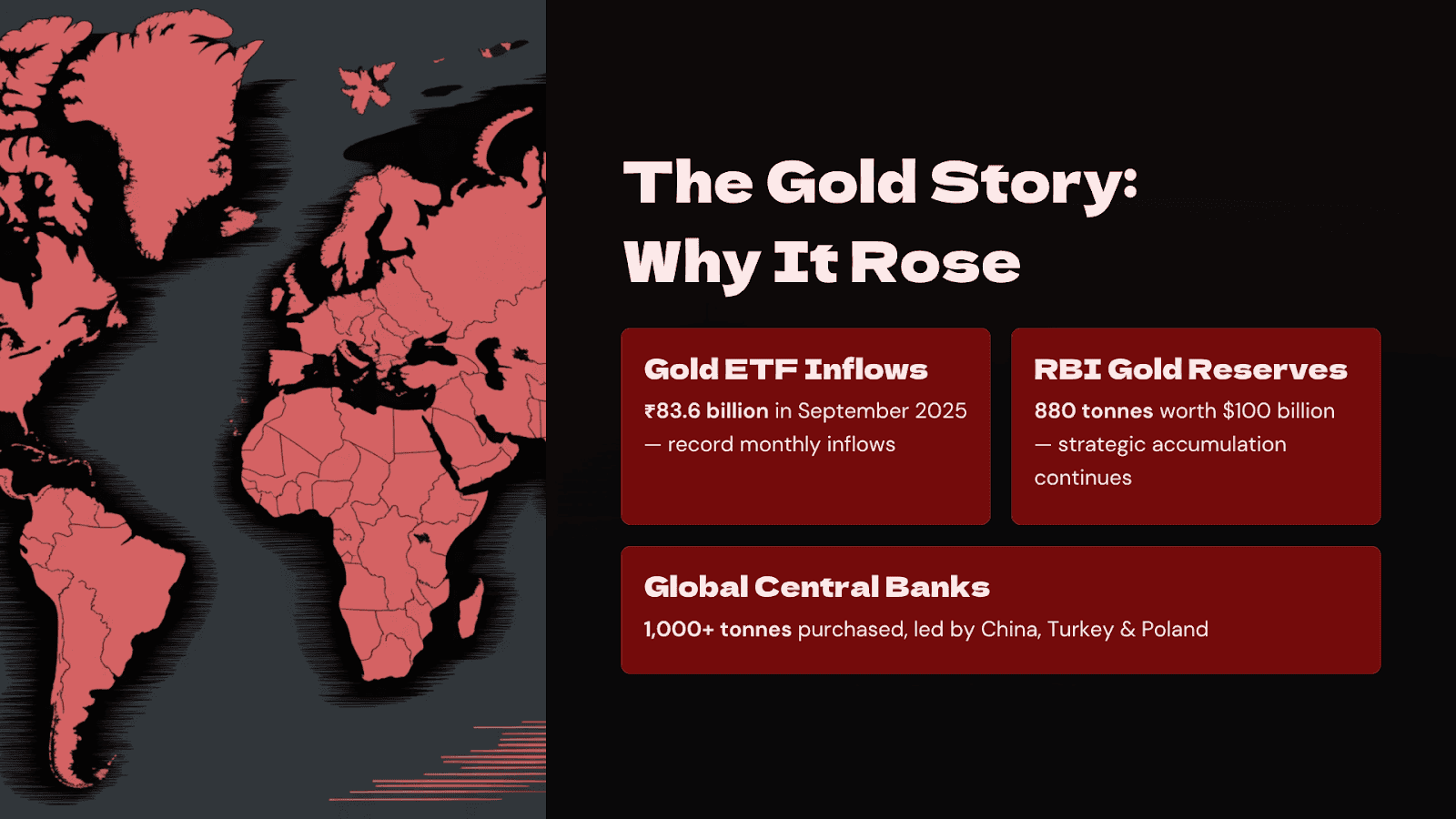
Gold ETFs in India recorded their highest-ever monthly inflows—₹83.6 billion in September.
The RBI’s reserves crossed $100 billion (roughly 880 tonnes) worth of gold, making India one of the world’s top sovereign holders.
Global central banks were buying over 1,000 tonnes of gold a year, led by China, Turkey, and Poland—the fastest accumulation in modern history.
Everyone believed nothing could go wrong—but within days, it did.
The Current Reality
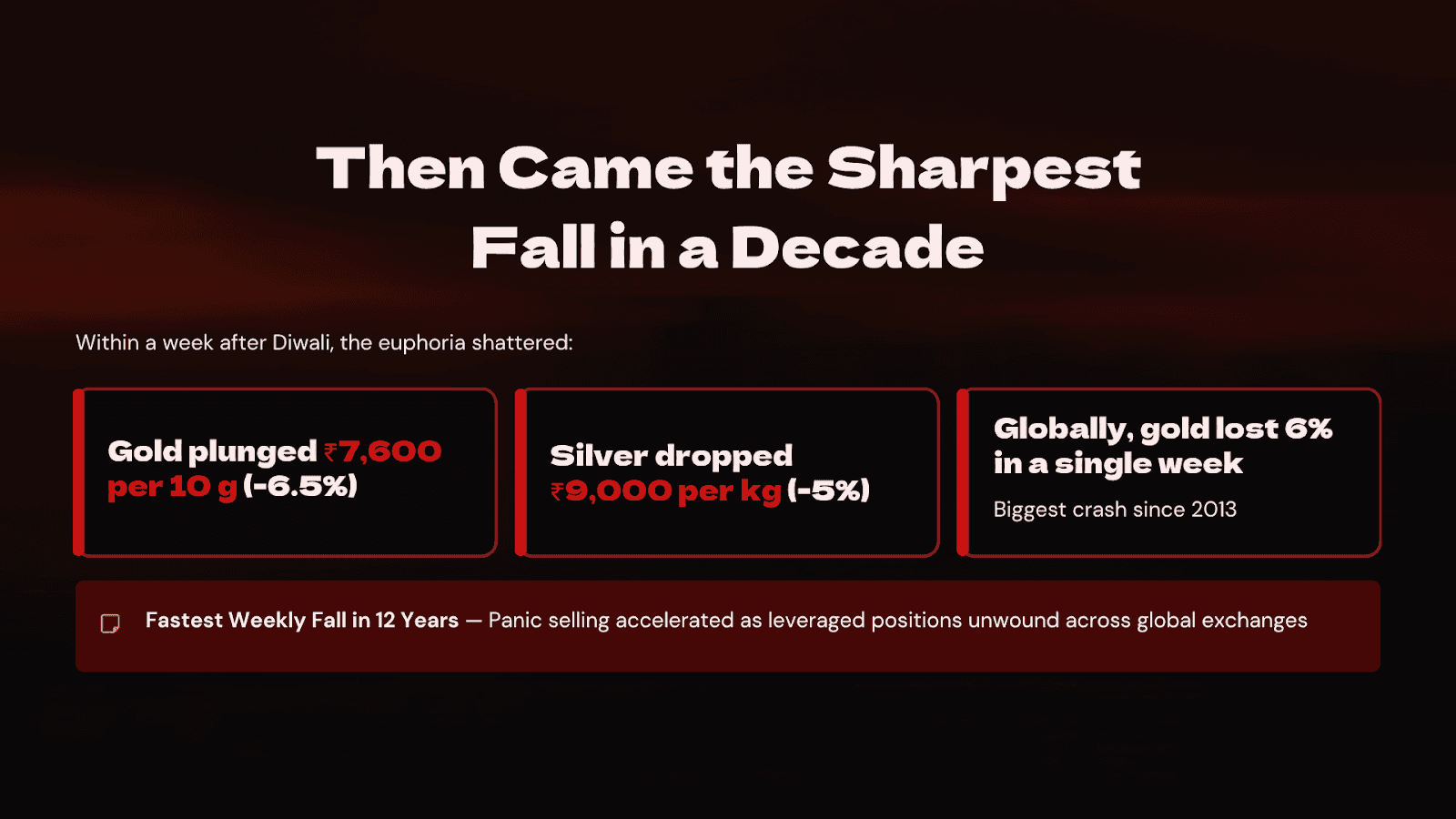
Barely a week after the festival, gold prices in India fell by more than ₹7,600 per 10 grams in just six days, the steepest weekly decline in over a decade. Silver too corrected sharply, slipping around ₹9,000 per kilo as global traders booked profits.
Globally, the fall was even more dramatic. Gold lost over 6% in a single week, its biggest drop since 2013. Headlines flipped from “Record Highs” to “Biggest Crash in Years.”
Investors were confused regarding what to do. Some feared they had bought at the top, while others wondered if this was their chance to buy the dip.
But before we can judge what comes next, it’s important to understand why gold rose so sharply in the first place.
The Gold Story: Why It Rose
Gold’s price rise is rooted in trust. It shines brightest when faith in financial systems fades.
The 2025 rally began long before Diwali, when global investors started questioning the value of money itself.
The U.S. Federal Reserve has stopped raising interest rates and plans to cut them soon. This means returns from savings and bonds are falling , so more people are turning to gold to protect their money’s value.
The U.S. dollar weakened through 2025. A weaker dollar automatically lifts gold prices worldwide.
Global debt hit $340 trillion, almost three times world GDP. Investors know such debt can’t be repaid, creating uncertainty and fear.
Central banks began ditching dollars and kept buying gold as a hedge, again resulting in the increase in gold price.
Whenever the promise of paper money looks shaky, gold reclaims its ancient role as the world’s neutral reserve.
The Silver Story: The Industrial Underdog

Silver’s rise this year wasn’t just emotional, it was strategic and industrial.
While gold rallied on policy fears, silver surged on technology. It’s now a core metal for multiple industries:
Every gigawatt of solar power uses around 25 kg of silver.
Every electric vehicle contains 1–3 ounces in wiring, sensors, and battery components.
The rise of AI data centres and 5G networks adds even more industrial demand.
As a result, over 70% of new silver demand now comes from industry, while global mine supply has barely grown. The Silver Institute reported a 149-million-ounce deficit for 2025, the fifth year in a row.
Inventories are at their lowest since 2016. Kotak AMC even had to pause inflows to its Silver ETF earlier this year due to physical shortages. That’s why silver crossed the $50/oz barrier for the first time in a decade.
Why Did Gold and Silver Fall?
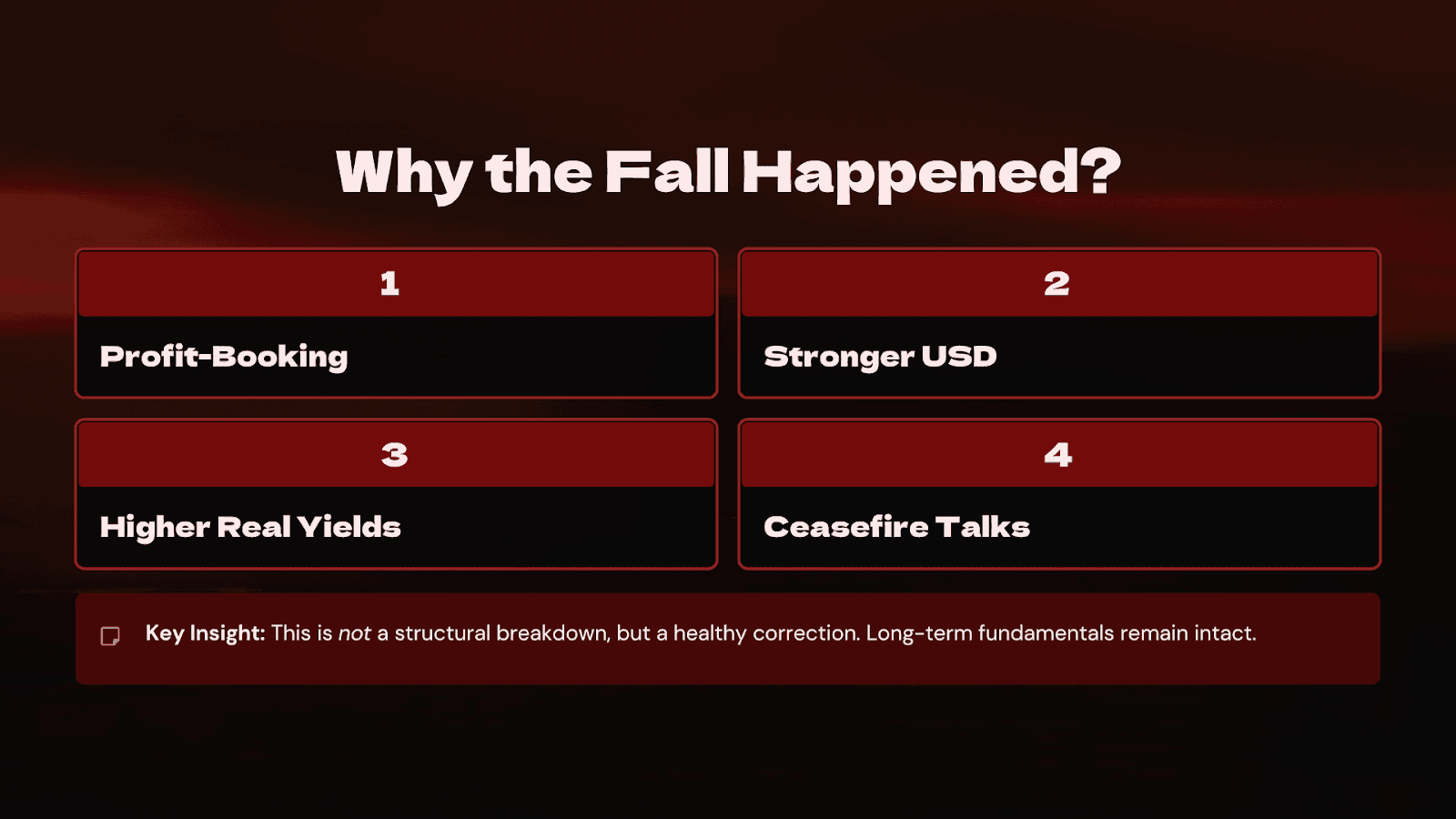
Every bull market needs a pause button. For gold and silver, post-Diwali 2025 was exactly that.
A combination of short-term factors triggered the pullback:
Profit-booking: Traders locked in gains after a record run.
Dollar strength: The U.S. economy surprised on the upside, pulling funds out of commodities.
Higher real yields: As inflation cooled but bond yields stayed firm, holding gold became temporarily less attractive.
Reduced war premium: Talks of ceasefires in key conflict zones calmed risk sentiment.
The sell-off wasn’t structural. Think of it as the market taking a breath before its next leg.
Even after the fall, gold remains up over 55% year-to-date, silver over 70%, and the macro backdrop (debt, liquidity, policy shifts) still favours them in the long run.
Now the most important question ,
Should You Buy Gold and Silver Now ?
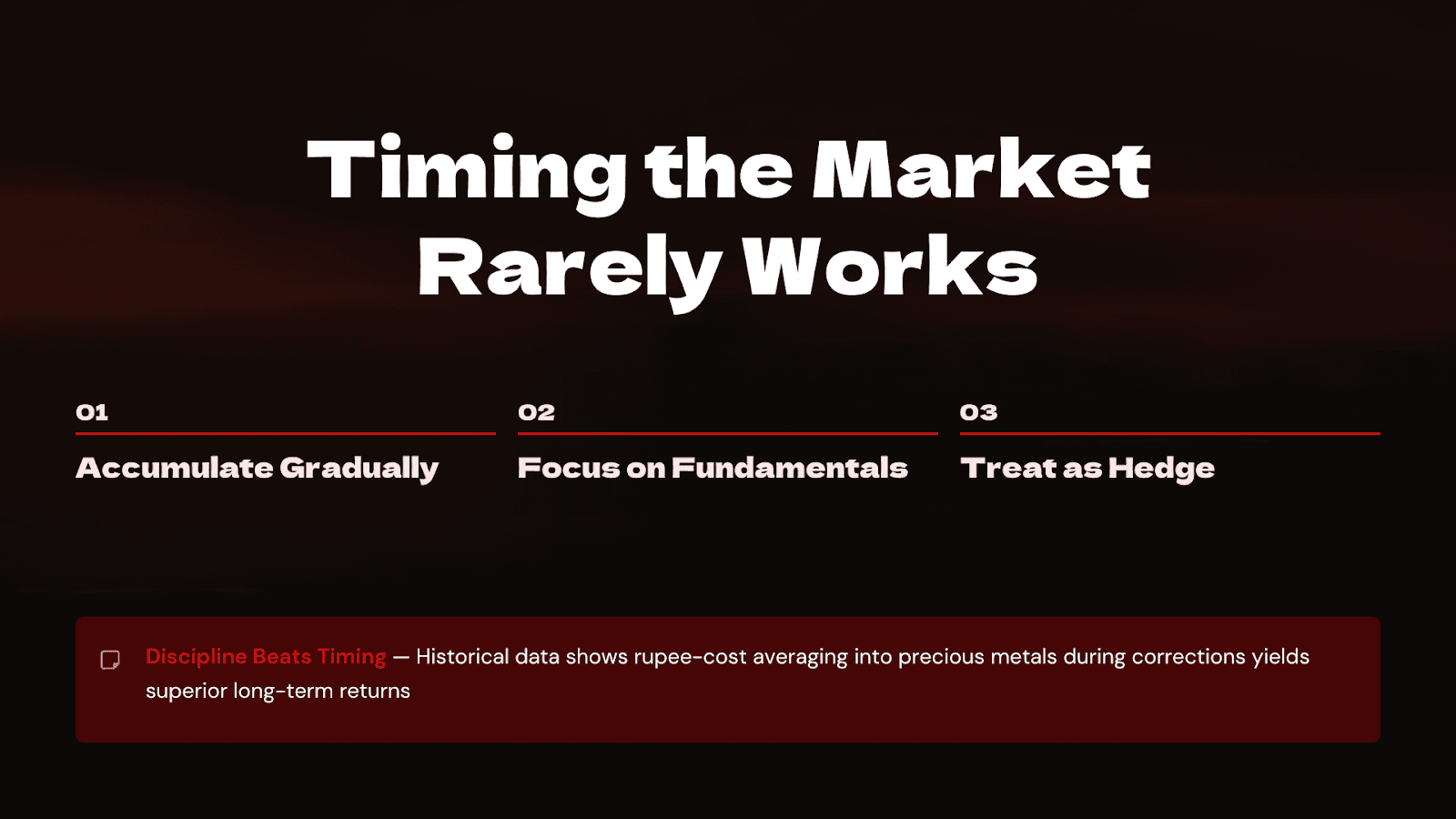
Will Gold and Silver rise or fall has nothing to do with the answer to this question.Chasing peaks and dips rarely works. Instead of going all in, use this correction to accumulate gradually.
Remember: short-term volatility can be beaten only by long-term discipline.
If you invest periodically (monthly, quarterly, or yearly) in Gold and Silver, you have nothing to worry about. Just keep them as a hedge, not your main asset and you are set.
How to Fit Gold & Silver in Your Portfolio
Now that you know the story, let’s talk about strategy.
Gold and silver serve distinct but complementary purposes:
Gold = Protection. It cushions your portfolio when markets fall or inflation bites.
Silver = Performance. It rides industrial and energy cycles, adding growth.
But because both often move together, overexposure doesn’t diversify risk, it doubles it
Here’s a simple rule of thumb:
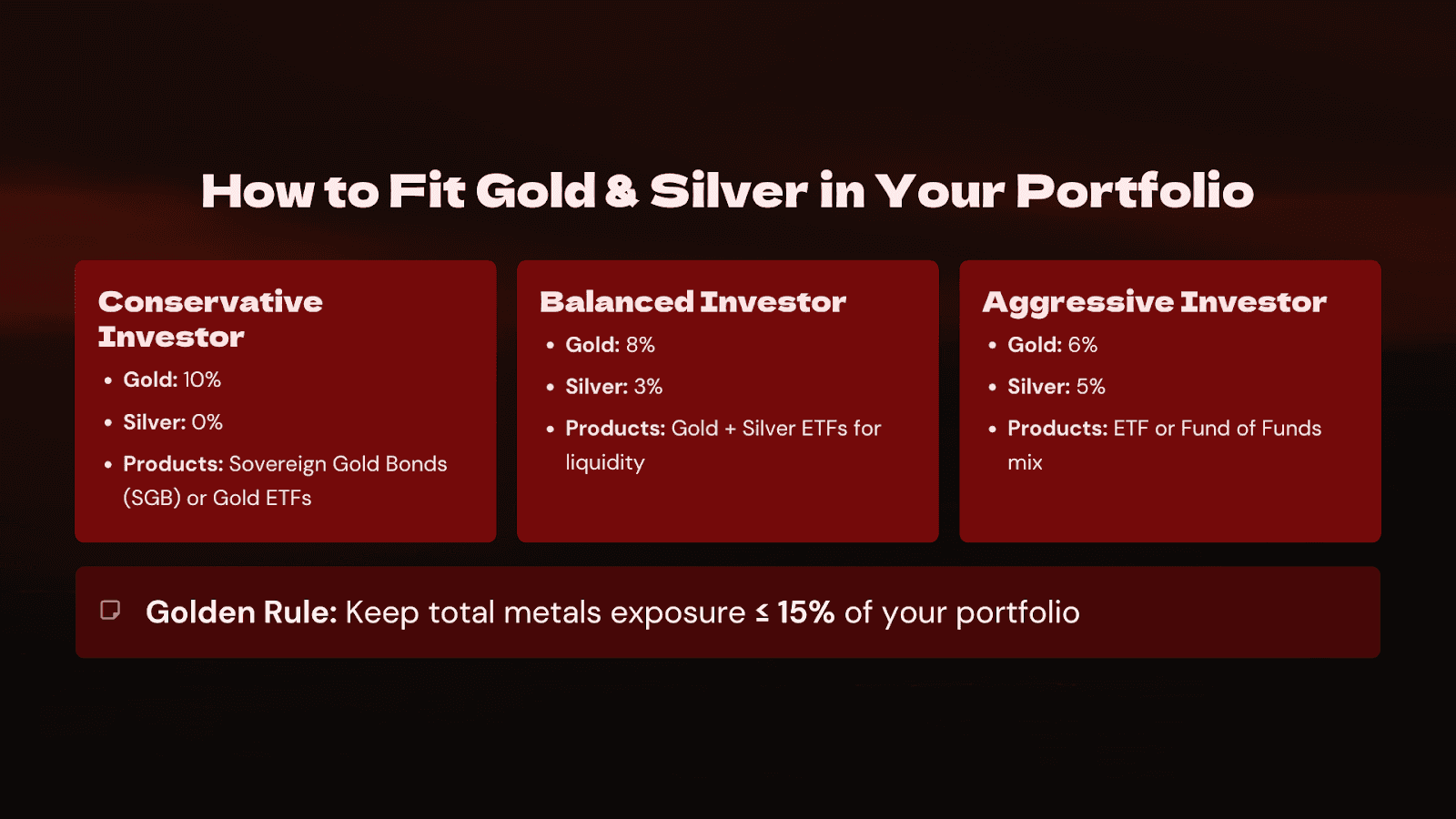
Investor Type | Gold Allocation | Silver Allocation | Ideal Product Route |
Conservative | 10% | 0% | Sovereign Gold Bonds or ETFs |
Balanced | 8% | 3% | Gold + Silver ETFs |
Aggressive | 6% | 5% | ETF/FoF combination for tactical exposure |
As a portfolio component, precious metals shouldn’t be your stars, they should be your anchors. The goal isn’t to double wealth, but to defend it when other assets wobble.
Keep total allocation under 15%, using them as a hedge, not a hero in your portfolio.
Build Your Precious-Metals Plan
If you’re wondering how much gold or silver fits your portfolio—or whether you should buy the dip—book a free call with Zomint’s SEBI-registered experts.
Get a data-backed, goal-linked plan tailored to your risk profile and market view.
Just days after Diwali, when families rushed to buy gold and silver at record-high prices, something shocking happened. Since then, prices have kept falling.
💥 Gold is down about 10%
💥Silver is down 8–17% from their all-time highs.
you might be unsure what to do next with your gold and silver investments.
Should you buy more?
Should you sell them?
Will prices rise again?
Or are they about to crash?
Don’t worry — we’ve done the complete research and will guide you on whether you should buy gold or silver, or avoid them completely.
The Diwali Fireworks: When Gold and Silver Stole the Show
This Diwali, jewellery stores across cities overflowed with customers. Despite record prices, families queued up with the same enthusiasm as always. Gold touched ₹1.3 lakh per 10 grams, and silver crossed ₹1.9 lakh per kilo. In several places, gold and silver bullion were out of stock, and people were paying a 10–15% premium to buy.
For a few dazzling weeks, it seemed like gold and silver were the next big investments and nothing could go wrong. The data supported that optimism too:
Gold ETFs in India recorded their highest-ever monthly inflows—₹83.6 billion in September.
The RBI’s reserves crossed $100 billion (roughly 880 tonnes) worth of gold, making India one of the world’s top sovereign holders.
Global central banks were buying over 1,000 tonnes of gold a year, led by China, Turkey, and Poland—the fastest accumulation in modern history.
Everyone believed nothing could go wrong—but within days, it did.
The Current Reality
Barely a week after the festival, gold prices in India fell by more than ₹7,600 per 10 grams in just six days, the steepest weekly decline in over a decade. Silver too corrected sharply, slipping around ₹9,000 per kilo as global traders booked profits.
Globally, the fall was even more dramatic. Gold lost over 6% in a single week, its biggest drop since 2013. Headlines flipped from “Record Highs” to “Biggest Crash in Years.”
Investors were confused regarding what to do. Some feared they had bought at the top, while others wondered if this was their chance to buy the dip.
But before we can judge what comes next, it’s important to understand why gold rose so sharply in the first place.
The Gold Story: Why It Rose
Gold’s price rise is rooted in trust. It shines brightest when faith in financial systems fades.
The 2025 rally began long before Diwali, when global investors started questioning the value of money itself.
The U.S. Federal Reserve has stopped raising interest rates and plans to cut them soon. This means returns from savings and bonds are falling , so more people are turning to gold to protect their money’s value.
The U.S. dollar weakened through 2025. A weaker dollar automatically lifts gold prices worldwide.
Global debt hit $340 trillion, almost three times world GDP. Investors know such debt can’t be repaid, creating uncertainty and fear.
Central banks began ditching dollars and kept buying gold as a hedge, again resulting in the increase in gold price.
Whenever the promise of paper money looks shaky, gold reclaims its ancient role as the world’s neutral reserve.
The Silver Story: The Industrial Underdog
Silver’s rise this year wasn’t just emotional, it was strategic and industrial.
While gold rallied on policy fears, silver surged on technology. It’s now a core metal for multiple industries:
Every gigawatt of solar power uses around 25 kg of silver.
Every electric vehicle contains 1–3 ounces in wiring, sensors, and battery components.
The rise of AI data centres and 5G networks adds even more industrial demand.
As a result, over 70% of new silver demand now comes from industry, while global mine supply has barely grown. The Silver Institute reported a 149-million-ounce deficit for 2025, the fifth year in a row.
Inventories are at their lowest since 2016. Kotak AMC even had to pause inflows to its Silver ETF earlier this year due to physical shortages. That’s why silver crossed the $50/oz barrier for the first time in a decade.
Why Did Gold and Silver Fall?
Every bull market needs a pause button. For gold and silver, post-Diwali 2025 was exactly that.
A combination of short-term factors triggered the pullback:
Profit-booking: Traders locked in gains after a record run.
Dollar strength: The U.S. economy surprised on the upside, pulling funds out of commodities.
Higher real yields: As inflation cooled but bond yields stayed firm, holding gold became temporarily less attractive.
Reduced war premium: Talks of ceasefires in key conflict zones calmed risk sentiment.
The sell-off wasn’t structural. Think of it as the market taking a breath before its next leg.
Even after the fall, gold remains up over 55% year-to-date, silver over 70%, and the macro backdrop (debt, liquidity, policy shifts) still favours them in the long run.
Now the most important question ,
Should You Buy Gold and Silver Now ?
Will Gold and Silver rise or fall has nothing to do with the answer to this question.Chasing peaks and dips rarely works. Instead of going all in, use this correction to accumulate gradually.
Remember: short-term volatility can be beaten only by long-term discipline.
If you invest periodically (monthly, quarterly, or yearly) in Gold and Silver, you have nothing to worry about. Just keep them as a hedge, not your main asset and you are set.
How to Fit Gold & Silver in Your Portfolio
Now that you know the story, let’s talk about strategy.
Gold and silver serve distinct but complementary purposes:
Gold = Protection. It cushions your portfolio when markets fall or inflation bites.
Silver = Performance. It rides industrial and energy cycles, adding growth.
But because both often move together, overexposure doesn’t diversify risk, it doubles it
Here’s a simple rule of thumb:
Investor Type | Gold Allocation | Silver Allocation | Ideal Product Route |
Conservative | 10% | 0% | Sovereign Gold Bonds or ETFs |
Balanced | 8% | 3% | Gold + Silver ETFs |
Aggressive | 6% | 5% | ETF/FoF combination for tactical exposure |
As a portfolio component, precious metals shouldn’t be your stars, they should be your anchors. The goal isn’t to double wealth, but to defend it when other assets wobble.
Keep total allocation under 15%, using them as a hedge, not a hero in your portfolio.
Build Your Precious-Metals Plan
If you’re wondering how much gold or silver fits your portfolio—or whether you should buy the dip—book a free call with Zomint’s SEBI-registered experts.
Get a data-backed, goal-linked plan tailored to your risk profile and market view.