
Everywhere you look, there's a bold new promise.
"AI will take over the world." "India's defence sector is on fire." "EVs are the future." "Manufacturing is booming."
Headlines, news debates, social media, influencers—everyone seems to be pointing at the next big thing. And deep down, a thought starts to grow: What if I could invest in these big ideas?
Well, you can. That's exactly what thematic mutual funds claim to offer. These funds promise to ride the wave of specific sectors that seem to have momentum, government support, or future potential.
Sounds exciting, right? But wait before investing. The full truth isn't what most people expect, and it might even shock you.
97 out of 168 sectoral schemes that existed for more than a year delivered negative returns as of July 2025. Out of which 19 new thematic funds launched in 2024 are currently in losses.
But don't worry, we at Zomint are here to break Thematic Funds down completely so that you can make informed financial decisions.
The Basics: What is a Thematic Fund?
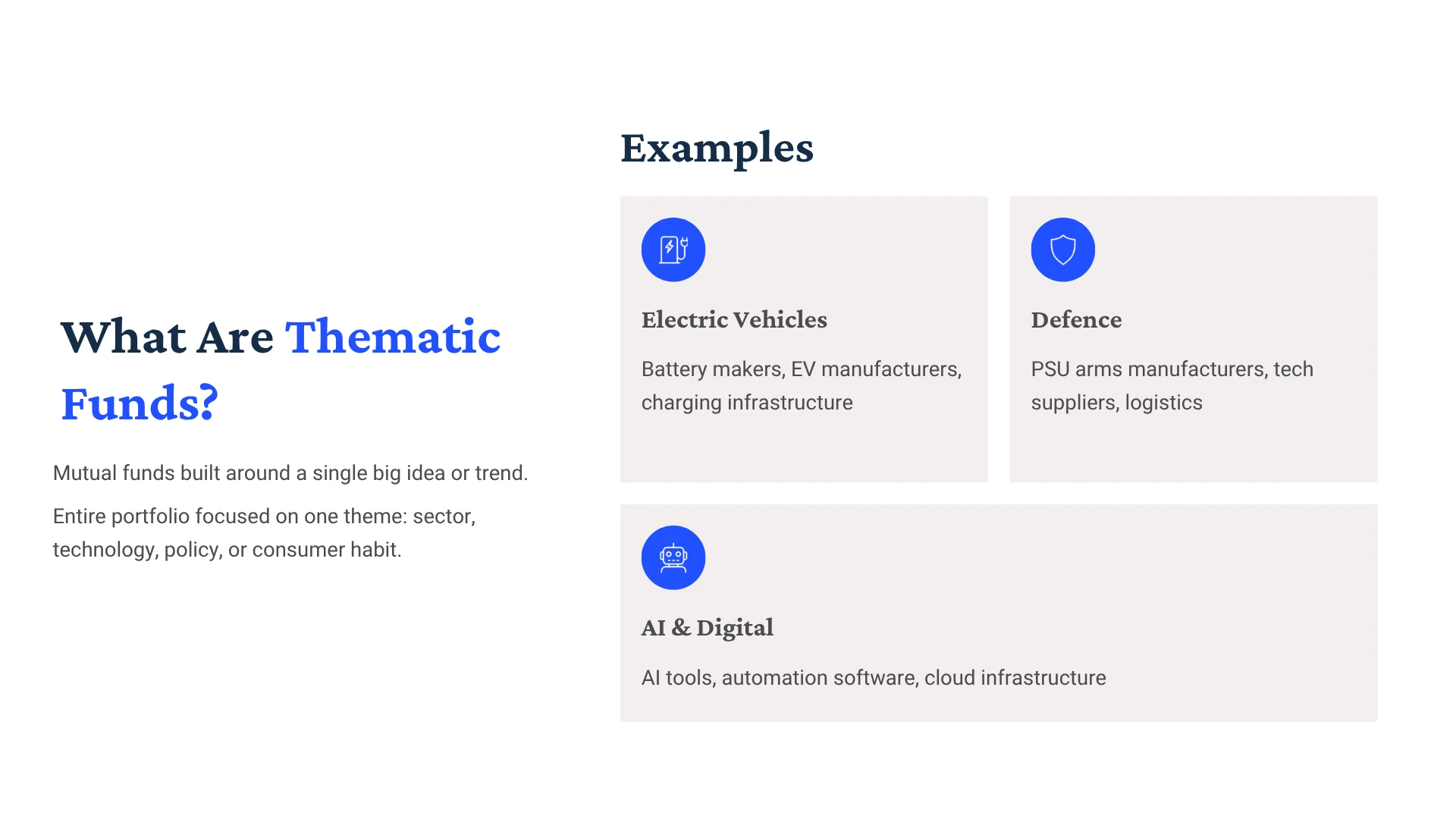
At its core, a thematic fund is a type of mutual fund that invests in companies connected to a single big idea or trend.
That idea could be anything: a sector, a technology, a policy push, or even a consumer habit. The key is: the entire portfolio is built around that one theme.
The Rise of Thematic Funds
Thematic funds didn't just show up recently, they've been around for years. But in the last 3–5 years, they've exploded in popularity.
In 2024, out of 180 new equity funds that were launched, a staggering 105 were thematic or sectoral funds. Investors poured in ₹88,000 crore, believing they were riding the next wave.
So what's behind this?
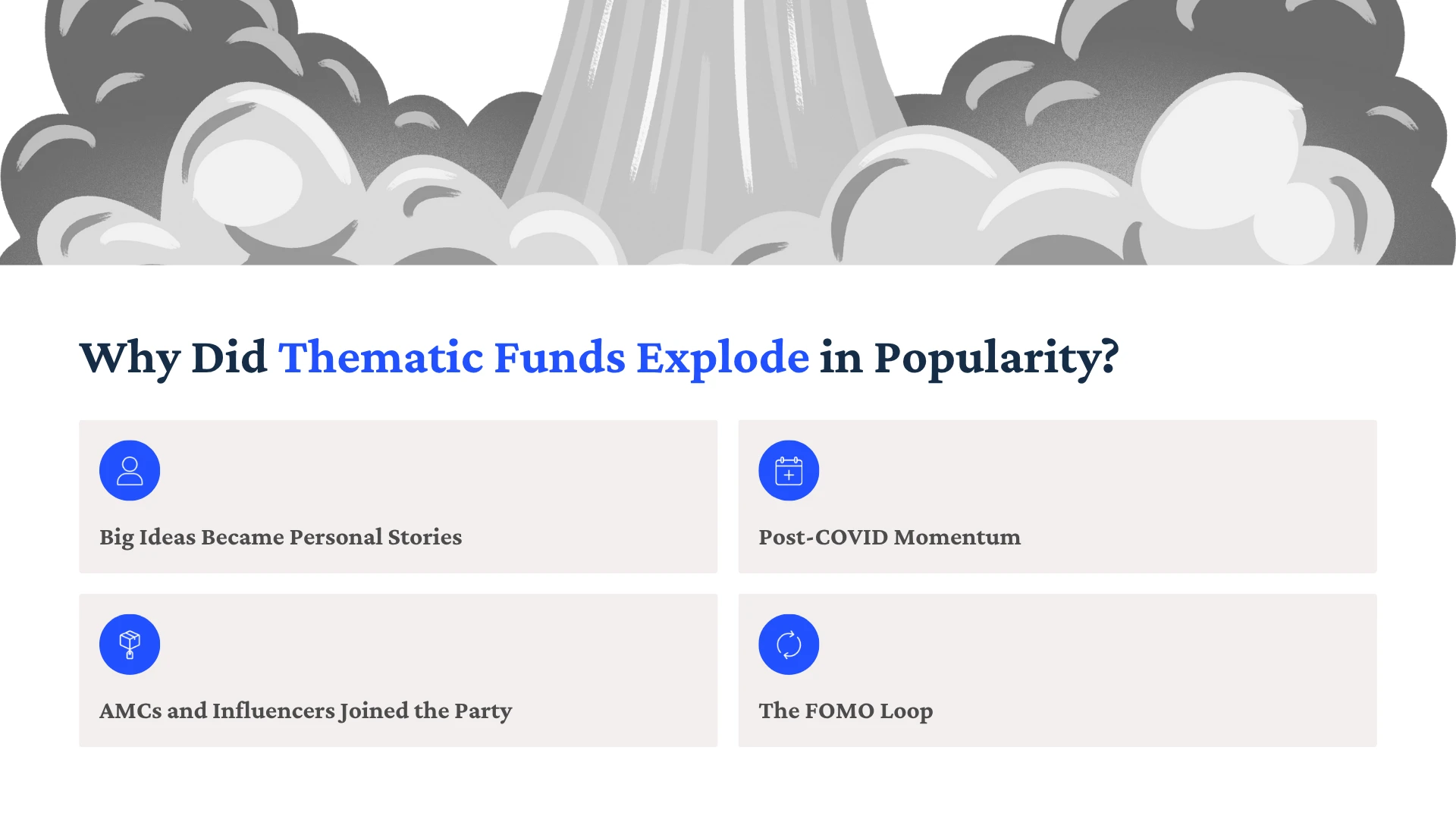
1. Big ideas became personal stories
Themes like Electric Vehicles, Artificial Intelligence, Make in India, Green Energy, and Consumption — they're easy to understand and feel real. You're seeing EVs on the road. AI tools in your phone. Solar panels in villages. It's natural to think: This is the future. I should invest in this.
2. Post-COVID momentum
After the pandemic crash, some of these themes — like tech, pharma, and defence—had a huge bounce. People saw charts with 80–100% returns and thought, Why am I still in boring funds when I could ride these waves?
During the COVID-19 pandemic, thematic pharma funds outpaced broad markets — the ICICI Prudential Pharma Healthcare & Diagnostics fund plummeting 20.4% in Mar 2020 then rallying 52.6% by Jun 2020.
3. Global Themes Join the Trend
It wasn't just India. Globally too, thematic ETFs and funds saw record inflows — from AI and Robotics funds in the US to Clean Energy and Semiconductor funds in Europe and Asia. Indian investors joined this wave through international FoFs and Gift City–based global thematic funds, gaining exposure to trends like Artificial Intelligence, EVs, and US Tech giants.
4. AMCs and advisors joined the party
More and more asset management companies (AMCs) started launching new thematic funds. Distributors and influencers found it easier to market something new and exciting rather than "just another flexicap fund." After all, "AI is the future" sounds a lot cooler than "stick to diversification."
5. The FOMO loop
Once a few funds did well and social media picked it up, others rushed in.
The problem? Most people saw the theme only after the returns had already come — and this is a very crucial point that we will cover later in the newsletter.
The Market Turn: From Hot Story to Hard Reality
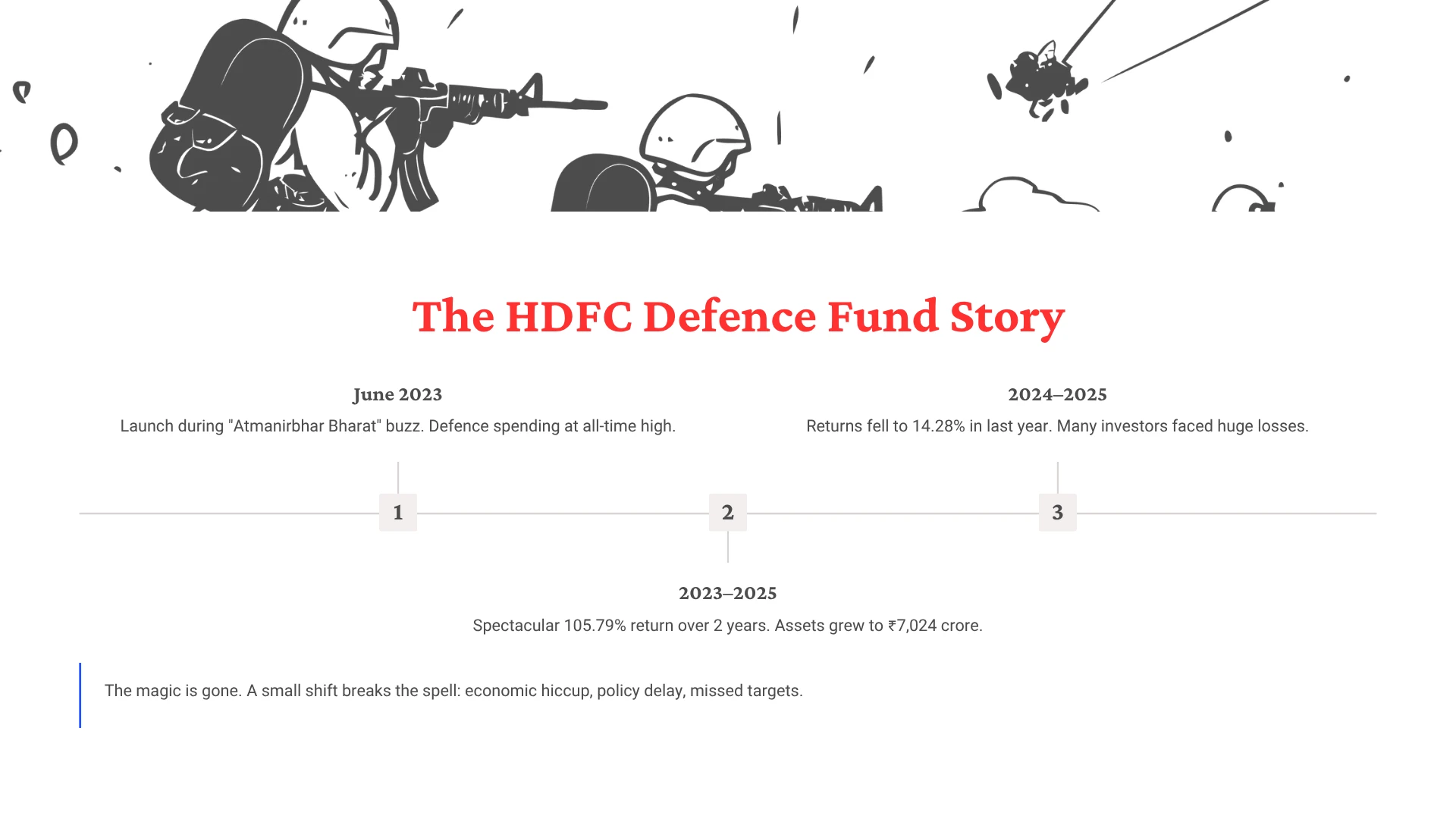
Let's take the example of HDFC Defence Fund — In 2023 India's defence spending was at an all-time high. The media was buzzing about "Atmanirbhar Bharat" and defence exports. The fund launched in June 2023, promising exposure to India's defence revolution. The fund delivered a spectacular 105.79% return over 2 years. With ₹7,024 crore in assets, it became one of the largest thematic funds.
Then, it just takes a small shift: a minor hiccup in the global economy, a delay in a government's plan, or a company missing its profit targets. Suddenly, the spell breaks.
In the case of HDFC Defence Funds, returns fell from 105.79% (2023) to 14.28% in the last year (2024-2025) and during this shift many people have faced huge losses.
And that brings us to the part no one advertises: the secret dangers of chasing after the latest trend, and why it often backfires 90% of the time.
The Hidden Risks of Thematic Funds
97 out of 168 sectoral schemes that existed for more than a year delivered negative returns as of July 2025. Out of which 19 new thematic funds launched in 2024 are currently in losses.
| Fund Name | Peak Return | 1-Year Return as of Oct 2025 |
|---|---|---|
| HDFC Defence Fund | 105.79% (Jun 2023–Jun 2025) | 14.28% (Oct 2024–Oct 2025) |
| HDFC Pharma & Healthcare Fund | 54.53% (Feb 2020–Feb 2021) | 8.65% (Oct 2024–Oct 2025) |
| ICICI Prudential Pharma Healthcare & Diagnostics (P.H.D) | 52.59% (Mar 2020–Jun 2020) | 4.18% (Oct 2024–Oct 2025) |
The same pattern played out in Global Thematic Funds — AI, EV, and Clean Energy ETFs that boomed in 2021–22 corrected sharply in 2023–24 as interest rates rose and valuations cooled. The excitement fades, but investors who joined late often remain stuck with below-average returns.
Now let's discuss the reasons:
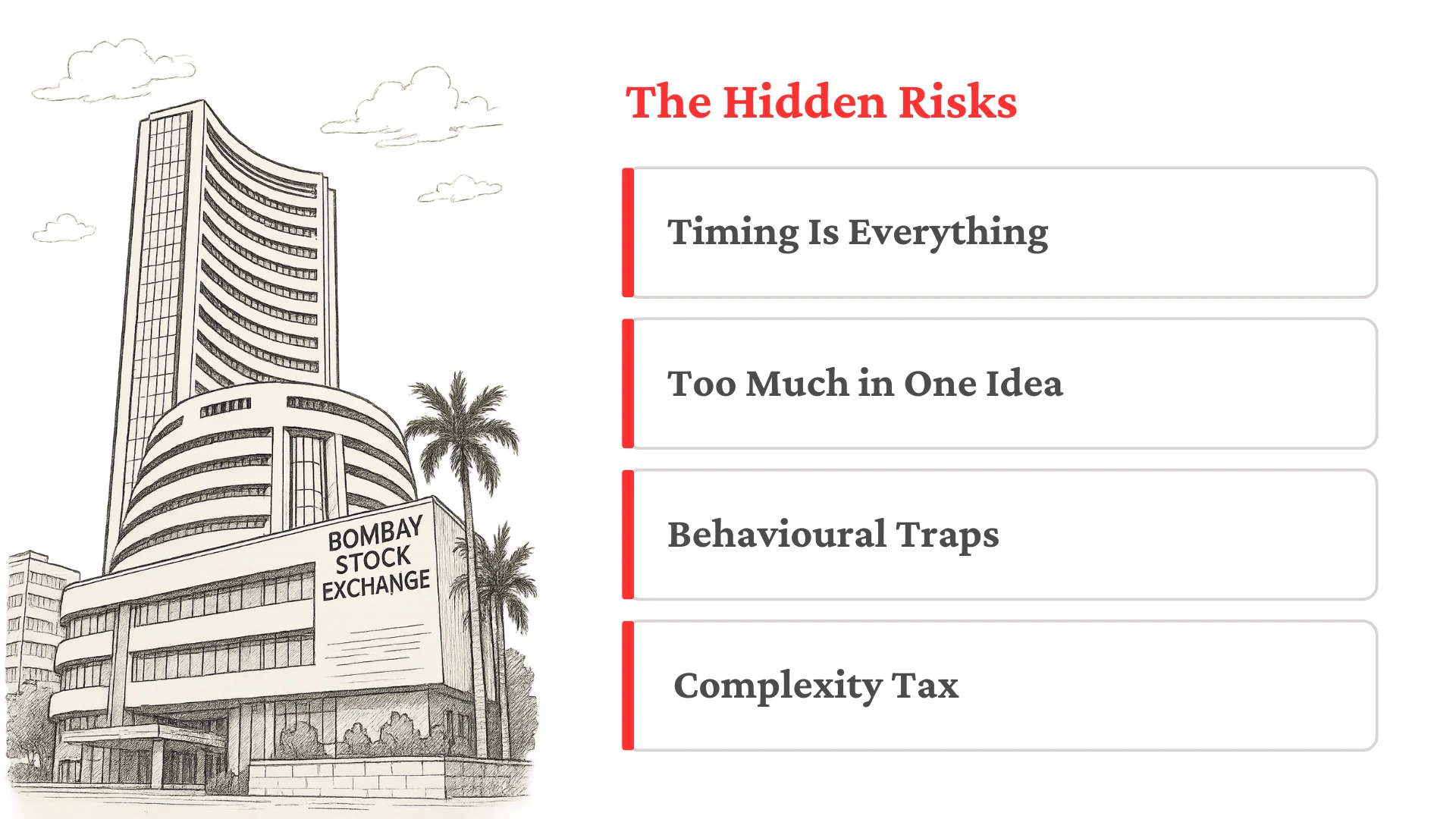
1. Timing is Everything (And Most Get It Wrong)
As we talked before, the crowd usually comes in after the easy money is made and this is one the biggest reason for losses faced by the investors.
2. Too Much in One Idea
When one policy drives your entire fund, you're more exposed than you think. Take defence-themed funds. They often have 10–15 holdings, all linked to the same sector. One delay in procurement or a policy shift and the entire portfolio feels the impact.
3. Behavioural Traps
Fear and greed drive poor decisions in narrow, high-volatility themes. Remember the Pharma & Healthcare funds during COVID? In 2020, they soared. Investors poured in. But by 2021–22, the hype faded, the sector cooled off, and many investors faced huge losses.
4. Complexity Tax
If you don't understand the business drivers, you won't know when to exit. Clean energy sounds simple, right? But under the hood are solar manufacturers, carbon credit traders, battery tech firms, and ESG plays. The mix of stocks can behave very differently.
How to Invest in Thematic Funds Wisely
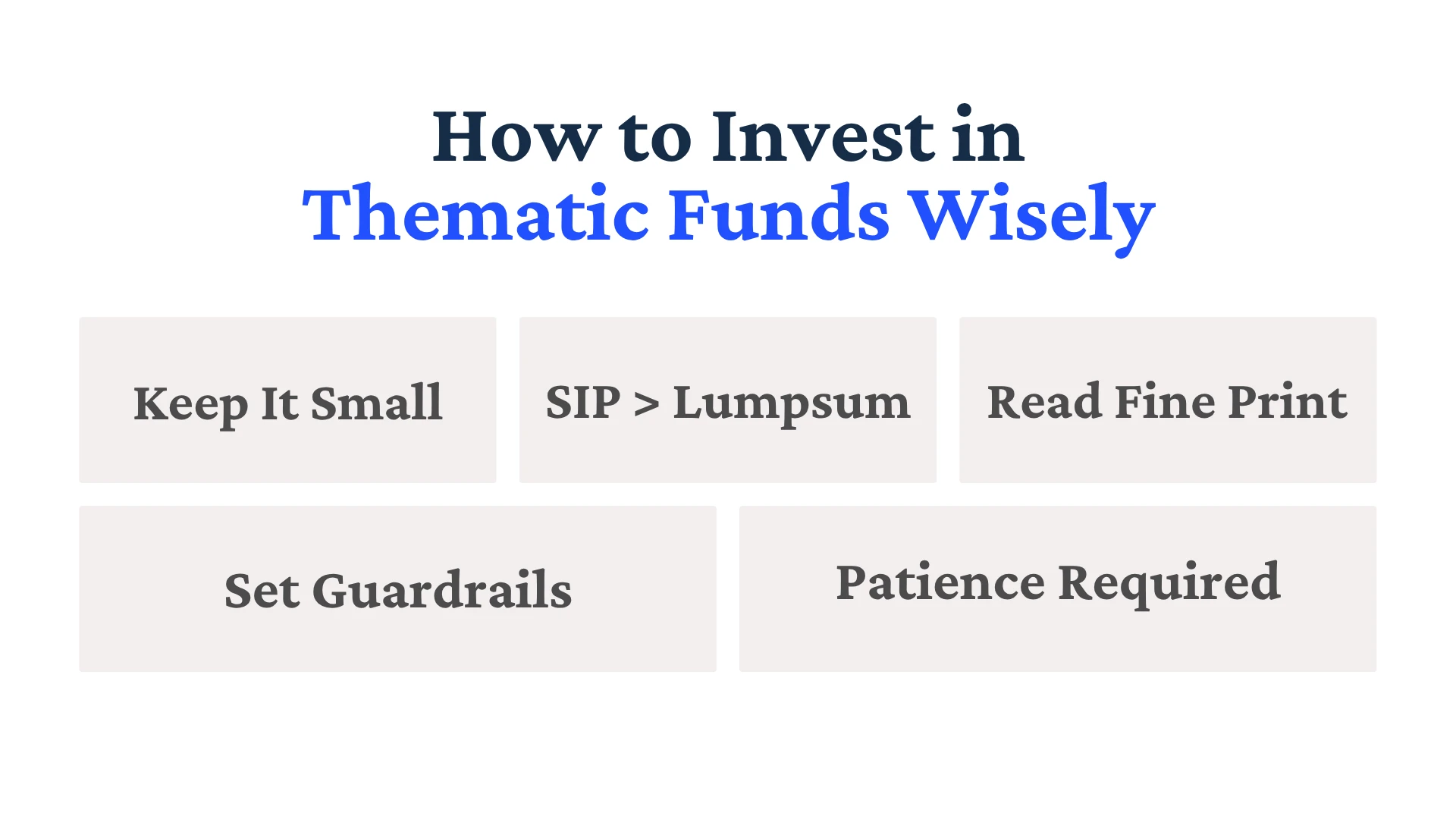
1. Keep It Small
Satellite Allocation Only — Limit exposure to 5–10% of your equity investments. Your main portfolio should still be balanced. Thematic funds can sit around it, adding a layer of opportunity (and risk).
2. SIP > Lumpsum
Themes move fast. It's hard to time a perfect entry. Spreading out your investment through Systematic Investment Plans (SIPs) smooths out the ride. You buy at highs, lows, and everything in between.
3. Read the Fine Print
What's in the Theme? Don't get fooled by the name. Always check:
- Is the theme tightly defined or loosely stretched?
- Are there only 6–8 stocks or a broad basket of 25+?
- Is it active (handpicked stocks) or an index (pre-decided basket)?
- What's the expense ratio? Is there an extra FoF (Fund of Fund) layer?
4. Set Guardrails
Before You Start — Have an exit plan before you enter.
Ask yourself:
- What's the maximum I'll allocate?
- When will I exit?
- How often will I rebalance?
This turns excitement into process and protects you from panic.
5. Patience Is the Price of Entry
Don't expect linear returns. If you can't sit through a 2-year lull or a 25% dip, it's probably not for you. Some themes will flatline for years before moving. For example, Manufacturing and PSU funds underperformed for years until 2023, when they suddenly roared back.
Final Conclusion
Thematic funds can be powerful. They give you exposure to big ideas like AI, Make in India, Clean Energy, Defence — and even global themes like US Tech, Robotics, and Renewable Energy through Gift City routes.
But they aren't shortcuts to wealth.
If you're curious about these themes or want help mapping them to your portfolio, book a call with our SEBI-registered experts.