Last winter, a young couple in Mumbai made an unusual choice. Instead of finding a long-term tenant for their Bandra 2BHK, they listed it on Airbnb. In just one peak month, the apartment earned ₹1.2 lakh, nearly three times the usual rent.Down south, a family in Goa saw their villa rake in over ₹10 lakh in a single season, which would have fetched just ₹50,000 in regular monthly rent.
These aren’t rare cases,Homeowners are waking up to a new opportunity of converting their idle property into high-yield, short-term rentals. But beneath the glossy numbers lies a more complex story.
Let’s explore the real economics behind India’s short-term rental boom in this edition of the Zomint Newsletter.
Why Is Airbnb Growing in India?
India’s real estate investors have long been stuck with low rental yields. A flat worth ₹1 crore typically brings in just ₹20,000–₹30,000 a month, barely enough to cover EMIs and maintenance. Airbnb and other short-term rental platforms are disrupting this equation, offering a new path to higher returns.
Several reasons for this shift:-
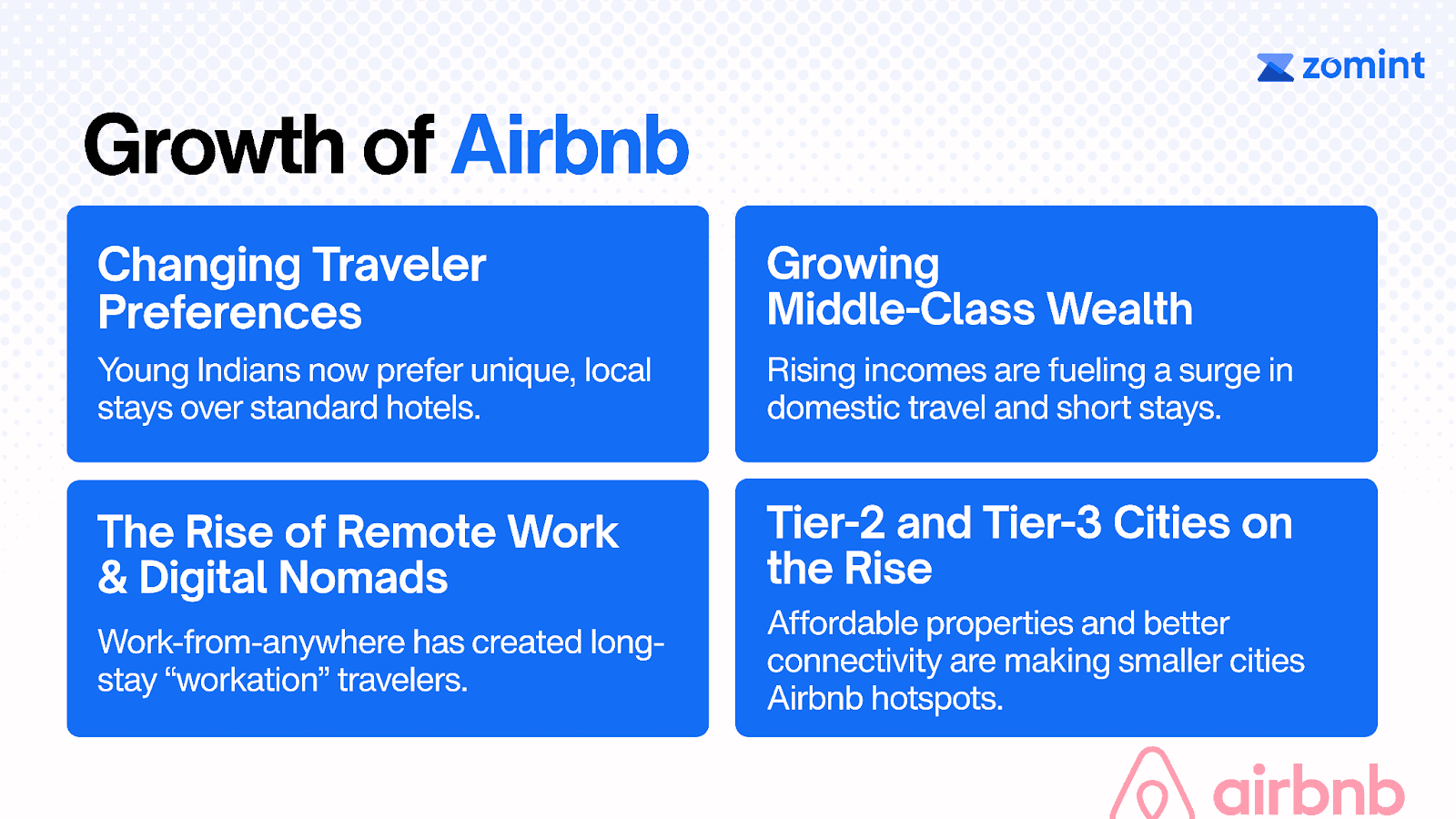
Changing Traveler Preferences Young Indians, especially millennials and Gen Z, are preferring authentic, local experiences over standard hotels. Whether it’s a heritage haveli in Jaipur, a coffee estate in Coorg, or a Bandra studio with character, homestays feel more personal and immersive.
The Rise of Remote Work & Digital Nomads Work-from-anywhere has created a new guest profile: the "workation" traveler. These professionals book for weeks, even months, providing hosts with steady income across the year rather than just seasonal spikes.
Growing Middle-Class Wealth As disposable incomes rise, Indians are traveling more within the country. Domestic bookings on Airbnb jumped 30% year-on-year, and the overall market is projected to grow from $2.9 billion in 2024 to $16.7 billion by 2034, a staggering 19% CAGR.
Tier-2 and Tier-3 Cities on the Rise In 2024, more than half of Airbnb’s bookings in India came from non-metro cities. With better highways, regional airports (UDAN scheme), and affordable property prices, towns like Rishikesh, Nashik, and Coonoor, etc., are becoming Airbnb hotspots.
While this sounds promising, the numbers reveal a more complex reality
Rent vs. Airbnb
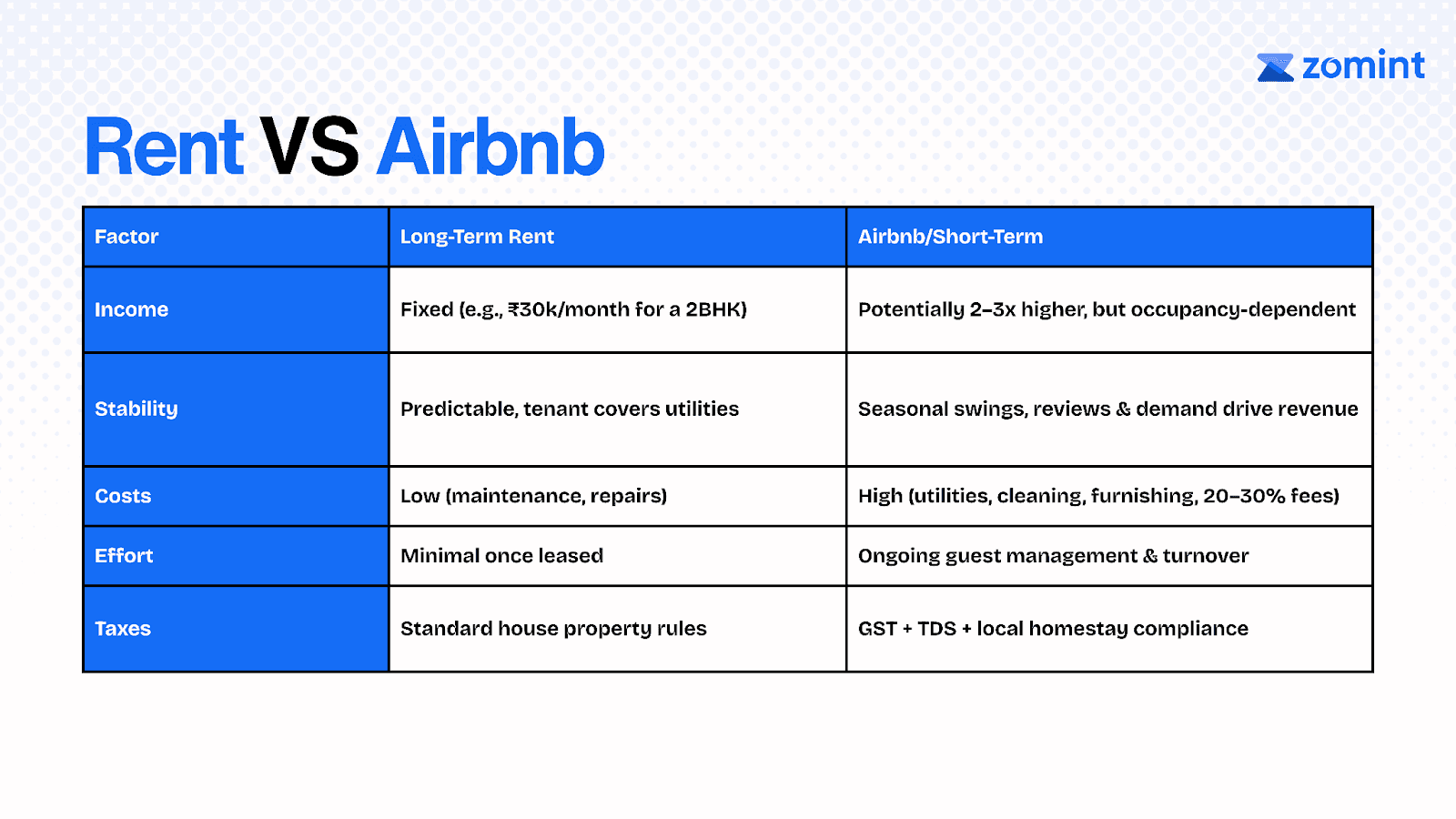
Airbnb has grabbed attention with stories of homes earning double or triple the rent of a regular lease. But to see the real picture, let’s compare it directly with traditional renting.
Here is a table to get a quick comparison between the two:-
The Setup Cost of Airbnb
Before your flat can start earning on Airbnb, it needs to be guest-ready. Unlike long-term rentals, where tenants bring their own furniture and pay utilities, short-term stays require you to provide a fully set-up living space.
This means investing in basics like comfortable furniture, reliable appliances, and smart amenities such as fast Wi-Fi and clean linens. A touch of style (good lighting, neat interiors, or even a coffee machine) can make your property stand out in photos and attract better reviews.
Technology upgrades like smart locks, along with professional photos and compliance registrations, also add credibility and convenience.
Think of these not as costs but as investments in hospitality as these small upgrades will quickly pay back through higher occupancy and repeat bookings.
After the initial setup, the key question is whether Airbnb is really passive income or not.
Is It Really Passive Income?
Airbnb is sold as the golden ticket to passive income, but the reality is far from glamorous. For most hosts, it’s less of a money-making machine and more of a full-time hustle disguised as an investment.
Running an Airbnb isn’t hands-off. Self-managing typically means 4–6 hours a week on guest queries, check-ins, cleaning coordination, and reviews. During peak season or for villas, this can rise to 15+ hours a week. Some hosts enjoy this role, treating hosting as a blend of business and hospitality. For others, the workload can feel overwhelming, and the idea of effortless income quickly fades.
Taxes, Rules, and Risks
Taxes & Compliance: Airbnb income is treated as “Income from House Property” under Indian tax law. That means you automatically get a 30% standard deduction, but you cannot separately claim expenses like cleaning charges or platform fees. If your property earns over ₹20 lakh a year, GST registration becomes mandatory. Stays priced under ₹7,500/night are taxed at 12%, while those above it attract 18%.
On top of this, Airbnb deducts 0.1% TDS on payouts, which rises to 5% if your PAN isn’t linked and beyond central rules, local governments add their own rules and regulations.
Risks: Airbnb hosting in India also comes with hidden risks. Some housing communities may object to frequent short stays. Hosts need to follow local registration and safety rules, which can add extra steps. There’s always the chance of guest misuse, property damage, or complaints from neighbors. On top of that, sudden changes in taxes, platform policies, or government rules can affect income and operations.
Now let’s talk about the most important part — the profit breakdown of a typical Airbnb.
Profit Breakdown of a Typical Airbnb
Airbnb earnings may seem like pure profit, but nearly 40% of the income goes into costs before the host receives any cash. On a ₹50,000 monthly booking, the breakdown typically looks like this:
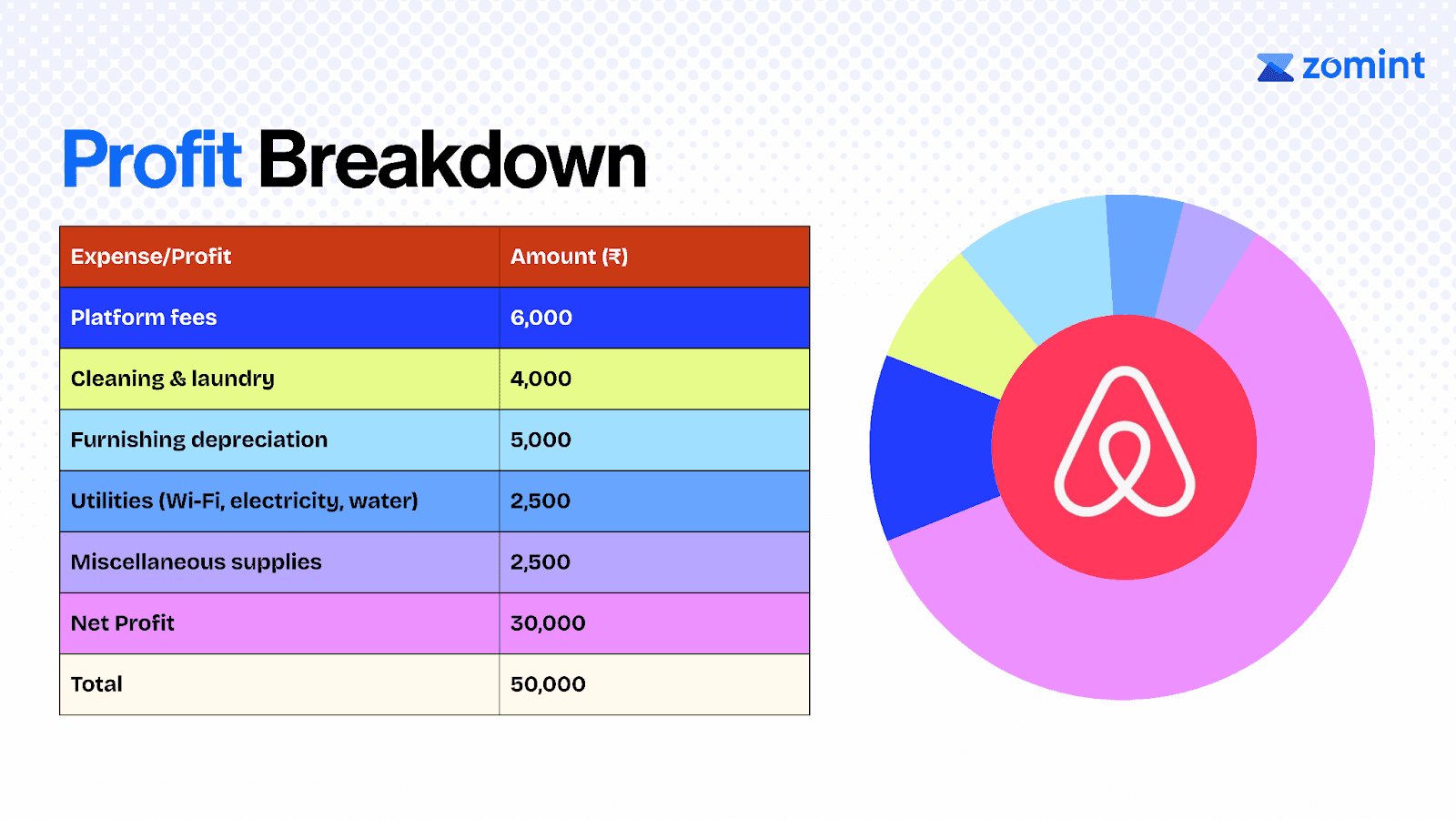
Even after expenses like fees, utilities, and upkeep, a well-managed Airbnb can still deliver stronger returns than traditional renting. While nearly 40% of income goes into costs, the remaining profit shows why hosting done smartly and in the right locations ,can be a rewarding opportunity.
Who Should Try Airbnb in India?
Airbnb can be a rewarding income stream, but it isn’t the right fit for everyone.
When Does Airbnb Make Sense? Airbnb works best for property owners who have some breathing room, either because the property is already paid off or because they aren’t relying entirely on the income to cover a loan. It’s particularly attractive for NRIs with vacant flats, HNIs with second homes, or families who own a property in high-demand areas such as Goa, Bandra, or Connaught Place.It also suits those who don’t mind treating the property like a small business.
When It’s Not the Best Idea Airbnb is less suitable for owners carrying heavy loans with no fallback. In these cases, a weak season or unexpected vacancy can put real pressure on cash flows. It’s also not ideal for investors who value predictability and stability.
Conclusion
Airbnb in India has opened up an exciting new way for property owners to earn more from their homes.That said, Airbnb is not a magic formula. It requires proper planning and execution to truly succeed.
That’s it from our side. We hope you found this edition of the newsletter insightful. Subscribe to the Zomint Newsletter for more deep-dive insights like these.
Last winter, a young couple in Mumbai made an unusual choice. Instead of finding a long-term tenant for their Bandra 2BHK, they listed it on Airbnb. In just one peak month, the apartment earned ₹1.2 lakh, nearly three times the usual rent.Down south, a family in Goa saw their villa rake in over ₹10 lakh in a single season, which would have fetched just ₹50,000 in regular monthly rent.
These aren’t rare cases,Homeowners are waking up to a new opportunity of converting their idle property into high-yield, short-term rentals. But beneath the glossy numbers lies a more complex story.
Let’s explore the real economics behind India’s short-term rental boom in this edition of the Zomint Newsletter.
Why Is Airbnb Growing in India?
India’s real estate investors have long been stuck with low rental yields. A flat worth ₹1 crore typically brings in just ₹20,000–₹30,000 a month, barely enough to cover EMIs and maintenance. Airbnb and other short-term rental platforms are disrupting this equation, offering a new path to higher returns.
Several reasons for this shift:-
Changing Traveler Preferences Young Indians, especially millennials and Gen Z, are preferring authentic, local experiences over standard hotels. Whether it’s a heritage haveli in Jaipur, a coffee estate in Coorg, or a Bandra studio with character, homestays feel more personal and immersive.
The Rise of Remote Work & Digital Nomads Work-from-anywhere has created a new guest profile: the "workation" traveler. These professionals book for weeks, even months, providing hosts with steady income across the year rather than just seasonal spikes.
Growing Middle-Class Wealth As disposable incomes rise, Indians are traveling more within the country. Domestic bookings on Airbnb jumped 30% year-on-year, and the overall market is projected to grow from $2.9 billion in 2024 to $16.7 billion by 2034, a staggering 19% CAGR.
Tier-2 and Tier-3 Cities on the Rise In 2024, more than half of Airbnb’s bookings in India came from non-metro cities. With better highways, regional airports (UDAN scheme), and affordable property prices, towns like Rishikesh, Nashik, and Coonoor, etc., are becoming Airbnb hotspots.
While this sounds promising, the numbers reveal a more complex reality
Rent vs. Airbnb
Airbnb has grabbed attention with stories of homes earning double or triple the rent of a regular lease. But to see the real picture, let’s compare it directly with traditional renting.
Here is a table to get a quick comparison between the two:-
The Setup Cost of Airbnb
Before your flat can start earning on Airbnb, it needs to be guest-ready. Unlike long-term rentals, where tenants bring their own furniture and pay utilities, short-term stays require you to provide a fully set-up living space.
This means investing in basics like comfortable furniture, reliable appliances, and smart amenities such as fast Wi-Fi and clean linens. A touch of style (good lighting, neat interiors, or even a coffee machine) can make your property stand out in photos and attract better reviews.
Technology upgrades like smart locks, along with professional photos and compliance registrations, also add credibility and convenience.
Think of these not as costs but as investments in hospitality as these small upgrades will quickly pay back through higher occupancy and repeat bookings.
After the initial setup, the key question is whether Airbnb is really passive income or not.
Is It Really Passive Income?
Airbnb is sold as the golden ticket to passive income, but the reality is far from glamorous. For most hosts, it’s less of a money-making machine and more of a full-time hustle disguised as an investment.
Running an Airbnb isn’t hands-off. Self-managing typically means 4–6 hours a week on guest queries, check-ins, cleaning coordination, and reviews. During peak season or for villas, this can rise to 15+ hours a week. Some hosts enjoy this role, treating hosting as a blend of business and hospitality. For others, the workload can feel overwhelming, and the idea of effortless income quickly fades.
Taxes, Rules, and Risks
Taxes & Compliance: Airbnb income is treated as “Income from House Property” under Indian tax law. That means you automatically get a 30% standard deduction, but you cannot separately claim expenses like cleaning charges or platform fees. If your property earns over ₹20 lakh a year, GST registration becomes mandatory. Stays priced under ₹7,500/night are taxed at 12%, while those above it attract 18%.
On top of this, Airbnb deducts 0.1% TDS on payouts, which rises to 5% if your PAN isn’t linked and beyond central rules, local governments add their own rules and regulations.
Risks: Airbnb hosting in India also comes with hidden risks. Some housing communities may object to frequent short stays. Hosts need to follow local registration and safety rules, which can add extra steps. There’s always the chance of guest misuse, property damage, or complaints from neighbors. On top of that, sudden changes in taxes, platform policies, or government rules can affect income and operations.
Now let’s talk about the most important part — the profit breakdown of a typical Airbnb.
Profit Breakdown of a Typical Airbnb
Airbnb earnings may seem like pure profit, but nearly 40% of the income goes into costs before the host receives any cash. On a ₹50,000 monthly booking, the breakdown typically looks like this:
Even after expenses like fees, utilities, and upkeep, a well-managed Airbnb can still deliver stronger returns than traditional renting. While nearly 40% of income goes into costs, the remaining profit shows why hosting done smartly and in the right locations ,can be a rewarding opportunity.
Who Should Try Airbnb in India?
Airbnb can be a rewarding income stream, but it isn’t the right fit for everyone.
When Does Airbnb Make Sense? Airbnb works best for property owners who have some breathing room, either because the property is already paid off or because they aren’t relying entirely on the income to cover a loan. It’s particularly attractive for NRIs with vacant flats, HNIs with second homes, or families who own a property in high-demand areas such as Goa, Bandra, or Connaught Place.It also suits those who don’t mind treating the property like a small business.
When It’s Not the Best Idea Airbnb is less suitable for owners carrying heavy loans with no fallback. In these cases, a weak season or unexpected vacancy can put real pressure on cash flows. It’s also not ideal for investors who value predictability and stability.
Conclusion
Airbnb in India has opened up an exciting new way for property owners to earn more from their homes.That said, Airbnb is not a magic formula. It requires proper planning and execution to truly succeed.
That’s it from our side. We hope you found this edition of the newsletter insightful. Subscribe to the Zomint Newsletter for more deep-dive insights like these.