
Two families, same income.
The first family books a last-minute trip to Goa, splurges on business class and beach resorts, and returns with a huge credit card bill. The trip is a memory, but the debt becomes a monthly burden.
The second family, with the same income, starts planning in April. They create a “Travel Fund,” save regularly, book flights early for about 40% less, choose a budget-friendly homestay, and use cashback offers. They return with great memories and no financial stress.
Same income. Same destination. Two completely different results.
This article gives you a clear blueprint: how much to allocate, when to book, which smart hacks to use, and how to review your trip so travel stays joyful and financially sound.
The Psychology of Overspending on Holidays
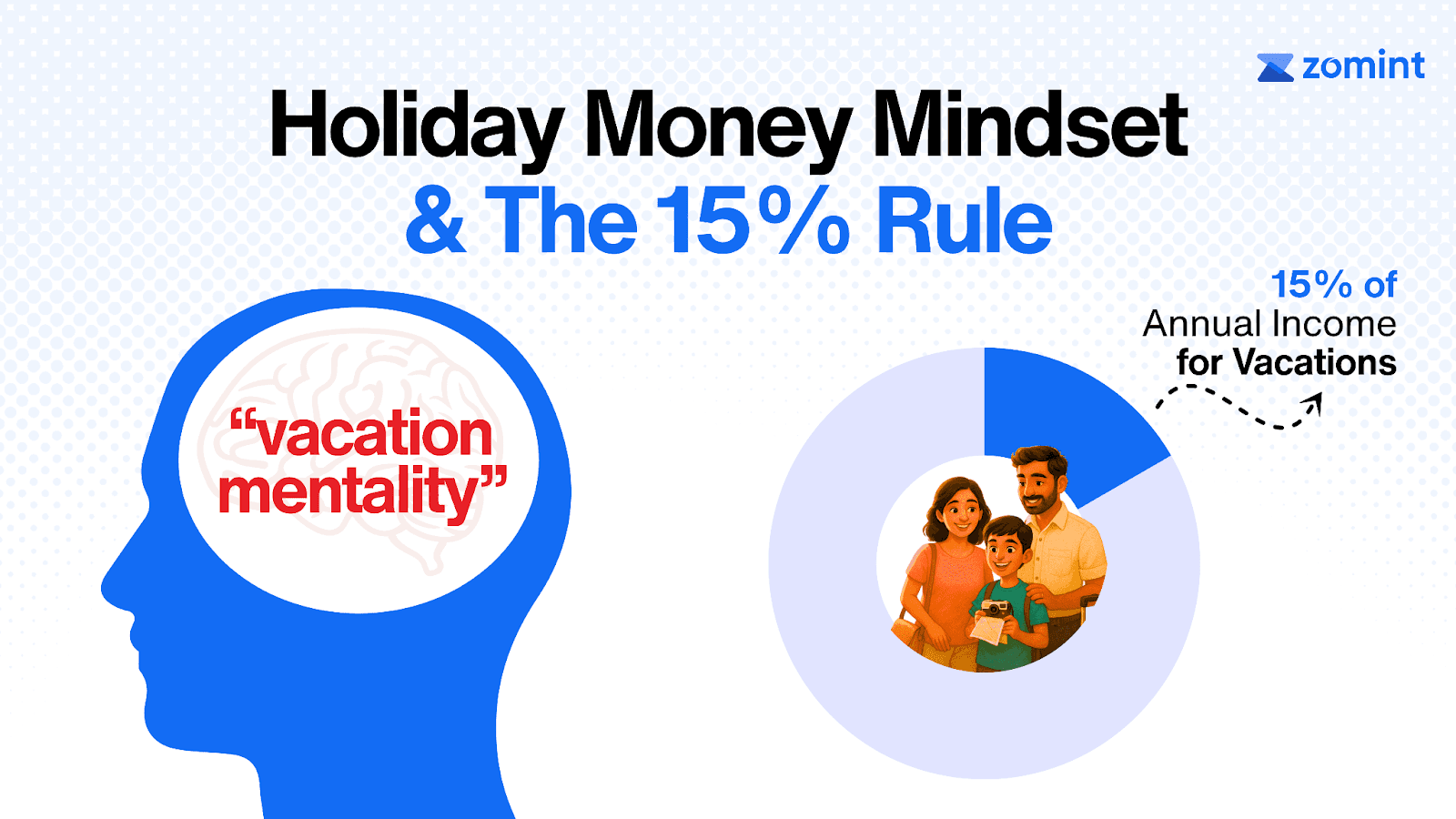
Why do so many of us blow our budgets the moment we land at a holiday destination? It’s not just weak discipline — it’s something deeper. Behavioral scientists call it the “vacation mentality.”
Here’s how it works. The moment you step out of your daily routine, your brain tells you: “This is a break from real life. Normal money rules don’t apply.” You suddenly feel you deserve that last-minute spa session, that overpriced beach dinner, or that expensive souvenir. After all, you’re here only once, right?
What’s worse is unplanned splurges often don’t even improve the experience. Rushed, last-minute bookings can mean you pay more for worse rooms. Impulse shopping can confuse you instead of memories. Instead of returning refreshed, you come back broke and tired.
Travel planning isn’t about being stingy. It’s about protecting yourself from your own brain. True freedom is enjoying that beach sunset without silently calculating how much debt you’ll carry back home.
The 15% Rule (Your Core Framework)
Here’s the simplest way to keep travel fun and debt-free: follow the 15% Rule.
What does that mean?
Every year, take 15% of your annual income and dedicate it to travel.
Stretch up to 20% only for once-in-a-lifetime trips — think Europe with parents, or your honeymoon.
And if you want to spend more on a dream trip, give yourself a break, save for two years, then go for it.
Building the Travel Fund (Pre-Vacation Blueprint)
You need to have a proper pre-vacation plan, because it’s very important for keeping your travel smooth and your finances under control.
The first step is to open a dedicated travel account. Think of it as your “Bali 2026 Fund” or “Europe with Parents Fund.” Automate savings into it the day your salary hits. Even ₹10,000–₹20,000 a month can quietly grow into ₹1.2–₹2.4 lakh in a year. The best part? It feels painless, because you never see the money sitting idle in your main account.
Next, fix your leaks. Track your spending for a month and you will see how much slips away on unused subscriptions, impulsive online shopping, and late night food orders. Redirect those savings to your travel fund.
Smart Booking for your Vacation
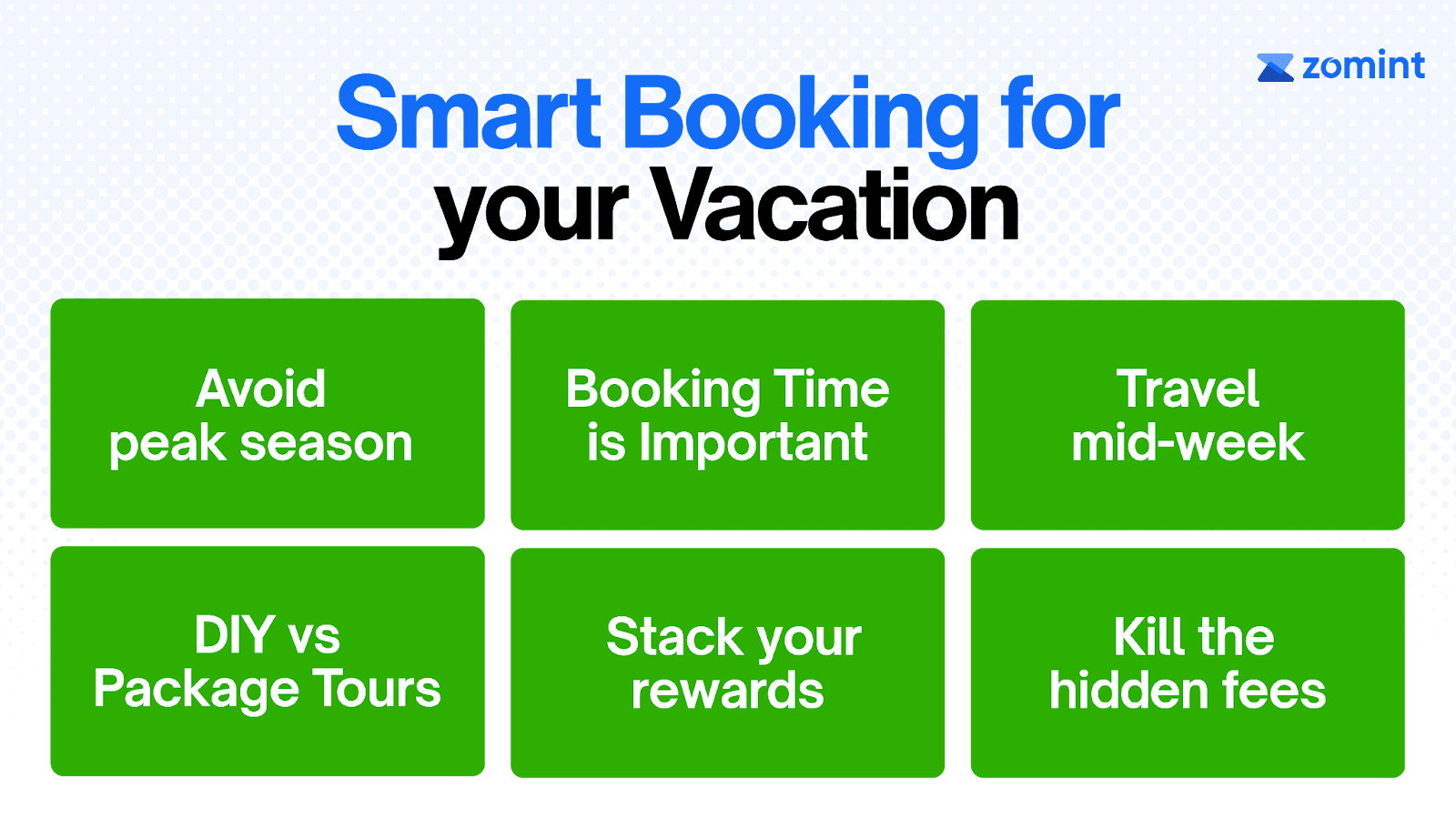
Here’s where most people win or lose big: the booking stage. A few smart moves here, can save you lakhs.
1. Timing is everything
For domestic flights, the sweet spot is 2–8 weeks before your trip.For internationals, the window is 3–5 months ahead. If you’re planning long-haul (like US or Canada), start looking 5–7 months before.
2. Travel mid-week
If you can, fly Tuesday or Wednesday. Domestic fares can be 10–15% lower, internationally about 8% cheaper compared to weekends.
3. Avoid peak season
Everyone wants Europe in August or Goa in December. You can shift by a few weeks, say September for Europe, or October for Goa and you’ll save up to 30% on both flights and hotels, with fewer crowds.
4. DIY vs Package Tours
Don't assume packages are cheaper. One family saved ₹1.1 lakh on a Europe trip by booking independently instead of opting for an agent's ₹3.4 lakh package. While DIY takes effort, it offers significant flexibility and savings.
5. Stack your rewards
Indian travelers often leave many great offers unused. Before you book, check:
Booking sites cashback offers
Bank card portals such as HDFC SmartBuy, Axis Edge, and SBI Yatra,etc
Airline and hotel loyalty programs
Air miles balances and any transfer bonuses
Credit card offers
6. Kill the hidden fees
Airlines make money from extras like baggage, seat selection, and priority boarding. Pre-pay baggage online, pack light, and skip add-ons.
In abroad, avoid dynamic currency conversion (DCC). Always pay in local currency.
Use a zero-forex-fee card. Otherwise, you lose 3% extra on every swipe.
On Vacation Strategies: Spend Smart, Not Less
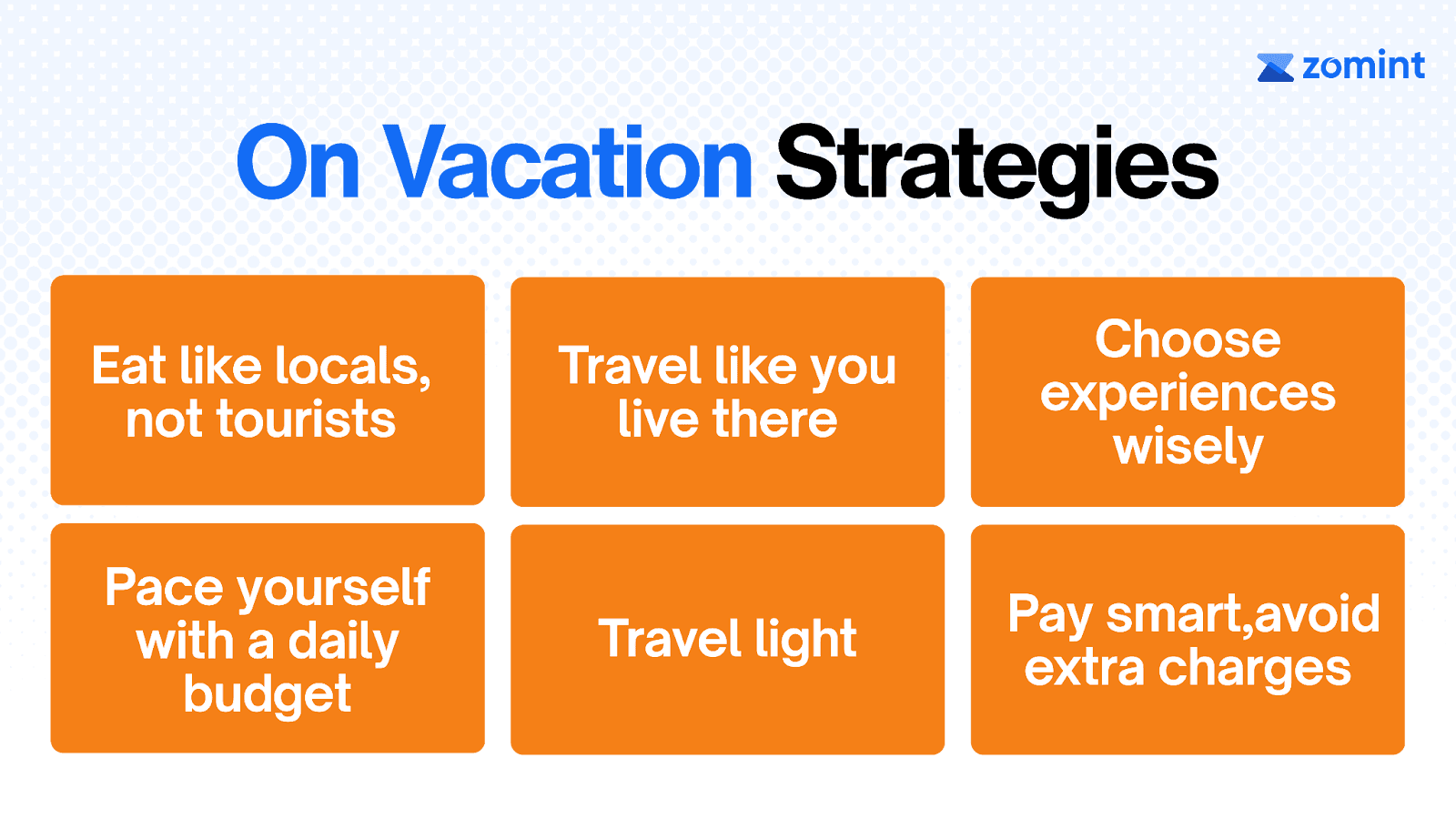
Okay, you’ve booked your tickets and saved for months. Now comes the real test: enjoying yourself without burning through your wallet in the first three days. Here’s how to keep it balanced.
1. Eat like locals, not tourists
Skip restaurants beside major landmarks. Follow locals, busy stalls, markets, or family-run cafés are cheaper and more authentic. If your hotel has breakfast, use it. In an Airbnb, cook a few simple meals to balance one fancy dinner.
2. Travel like you live there
Cabs are budget killers. Metro passes, buses, or even renting a cycle save thousands. Walking isn’t just free, it’s how you stumble upon hidden alleys, street art, and local life. If you do take a taxi, ask a local what the ride should cost. Don’t let “tourist rates” empty your pocket.
3. Choose experiences wisely
You don’t need to pay for every shiny attraction. Free walking tours, public rooftops, or local night markets often beat pricey bus tours or observatory tickets. Splurge only on what truly excites you , maybe a scuba dive in the Maldives or a hot air balloon ride in Cappadocia.
4. Pace yourself with a daily budget
If it’s a 10-day, ₹50,000 trip, aim for ~₹5,000 per day. If you overspend today, pull back tomorrow. Don’t be the traveler eating instant noodles for three days in London because you blew your budget at Harrods on day one.
5. Travel light
Carrying only one carry-on means no baggage fees and less stress. The limited space also reduces impulse purchases, so you spend on memories, not clutter.
6. Pay smart, avoid extra charges
Use a no-forex-markup card when you’re abroad and always choose to pay in the local currency. If you need cash, withdraw larger amounts to reduce ATM fees. Avoid airport exchange counters, and for city travel, load a transit card/pass to get cheaper fares and keep spending predictable.
Post Vacation Audit (The Step Everyone Skips)
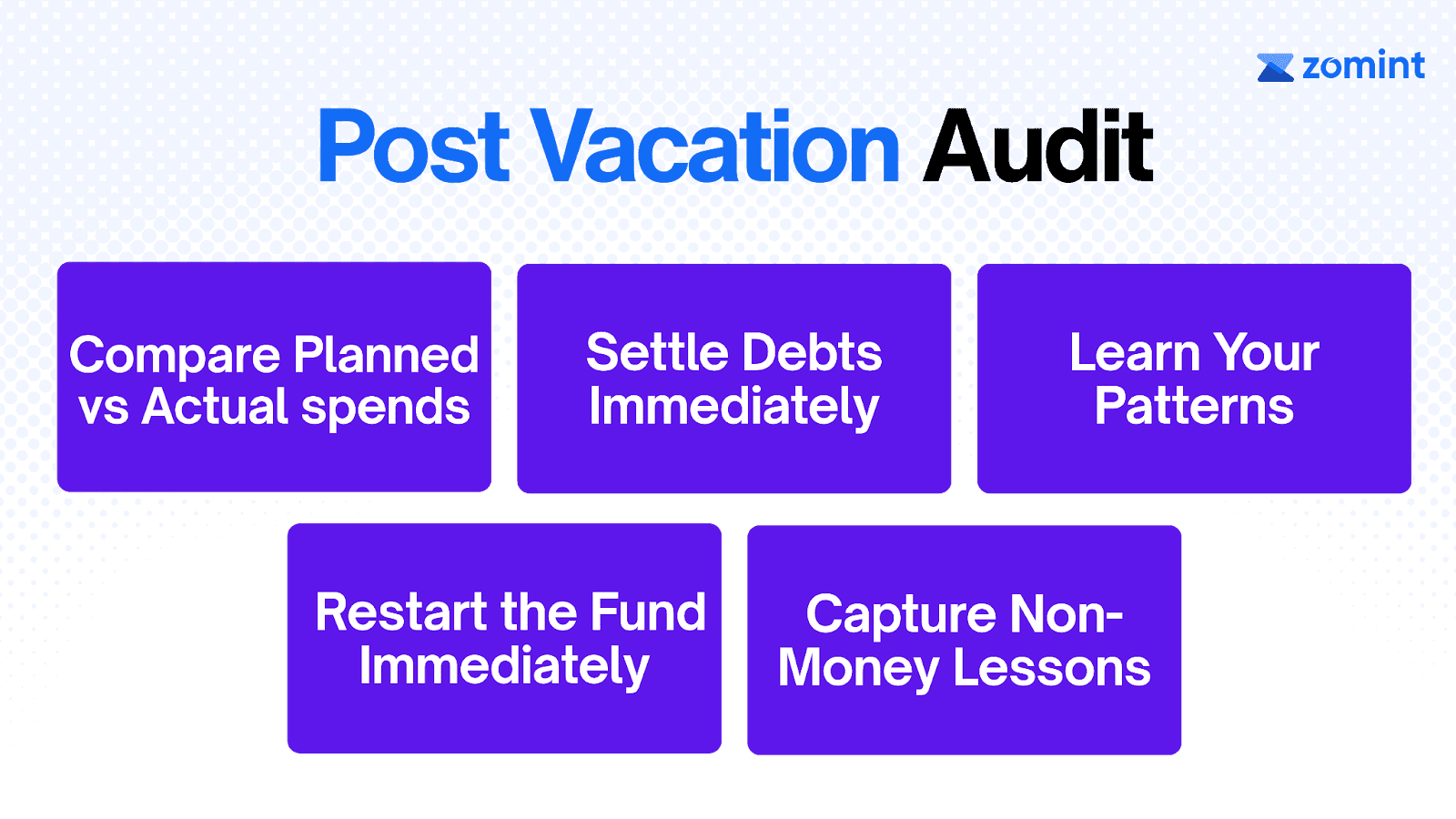
Most travelers unpack their bags, upload photos, and… never think about the money they just spent. That’s a mistake.
1. Compare Planned vs Actual
List what you planned for flights, stays, food, shopping and what you actually spent. The gap will surprise you. Knowing this helps refine your next trip budget.
2. Settle Debts Immediately
If you put expenses on a credit card, pay them off in full before the due date. Don’t carry holiday joy into holiday EMIs.
3. Learn Your Patterns
Did you overspend on impulse shopping? Did taxi fares eat more than expected? Was the hotel worth the premium, or would a boutique stay have been better? These insights make your next trip sharper.
4. Rebuild the Fund Immediately
The worst mistake is letting the travel account sit empty. The week you’re back, restart your automated transfer. Even if you can’t think of your next destination yet, let the fund grow. When the travel bug bites again, you’ll already be prepared.
5. Capture Non-Money Lessons
Value isn't always about money. Perhaps you discovered you prefer homestays to resorts, or that a well-planned buffer day helps you avoid burnout. Note these lessons down—they're just as valuable as any budget hack.
Sign-Off
Here’s the rule of thumb: keep your travel spend at 15% of your annual income, and never cross 20%. By saving for your trip, booking smartly, and spending on what truly matters, every holiday will feel lighter on both your heart and your wallet. After all, the real luxury isn’t a five-star suite or a business-class ticket; it's returning from your trip with no debt, no guilt, and only great memories.
That’s all for today.
If this resonated, share it with that one friend who’s always broke after a vacation and they might just thank you later.
Planning your next holiday is just the first step toward true financial freedom. To create a complete plan that balances travel and long-term wealth, book a free call with our SEBI-registered financial experts at zomint.
Two families, same income.
The first family books a last-minute trip to Goa, splurges on business class and beach resorts, and returns with a huge credit card bill. The trip is a memory, but the debt becomes a monthly burden.
The second family, with the same income, starts planning in April. They create a “Travel Fund,” save regularly, book flights early for about 40% less, choose a budget-friendly homestay, and use cashback offers. They return with great memories and no financial stress.
Same income. Same destination. Two completely different results.
This article gives you a clear blueprint: how much to allocate, when to book, which smart hacks to use, and how to review your trip so travel stays joyful and financially sound.
The Psychology of Overspending on Holidays
Why do so many of us blow our budgets the moment we land at a holiday destination? It’s not just weak discipline — it’s something deeper. Behavioral scientists call it the “vacation mentality.”
Here’s how it works. The moment you step out of your daily routine, your brain tells you: “This is a break from real life. Normal money rules don’t apply.” You suddenly feel you deserve that last-minute spa session, that overpriced beach dinner, or that expensive souvenir. After all, you’re here only once, right?
What’s worse is unplanned splurges often don’t even improve the experience. Rushed, last-minute bookings can mean you pay more for worse rooms. Impulse shopping can confuse you instead of memories. Instead of returning refreshed, you come back broke and tired.
Travel planning isn’t about being stingy. It’s about protecting yourself from your own brain. True freedom is enjoying that beach sunset without silently calculating how much debt you’ll carry back home.
The 15% Rule (Your Core Framework)
Here’s the simplest way to keep travel fun and debt-free: follow the 15% Rule.
What does that mean?
Every year, take 15% of your annual income and dedicate it to travel.
Stretch up to 20% only for once-in-a-lifetime trips — think Europe with parents, or your honeymoon.
And if you want to spend more on a dream trip, give yourself a break, save for two years, then go for it.
Building the Travel Fund (Pre-Vacation Blueprint)
You need to have a proper pre-vacation plan, because it’s very important for keeping your travel smooth and your finances under control.
The first step is to open a dedicated travel account. Think of it as your “Bali 2026 Fund” or “Europe with Parents Fund.” Automate savings into it the day your salary hits. Even ₹10,000–₹20,000 a month can quietly grow into ₹1.2–₹2.4 lakh in a year. The best part? It feels painless, because you never see the money sitting idle in your main account.
Next, fix your leaks. Track your spending for a month and you will see how much slips away on unused subscriptions, impulsive online shopping, and late night food orders. Redirect those savings to your travel fund.
Smart Booking for your Vacation
Here’s where most people win or lose big: the booking stage. A few smart moves here, can save you lakhs.
1. Timing is everything
For domestic flights, the sweet spot is 2–8 weeks before your trip.For internationals, the window is 3–5 months ahead. If you’re planning long-haul (like US or Canada), start looking 5–7 months before.
2. Travel mid-week
If you can, fly Tuesday or Wednesday. Domestic fares can be 10–15% lower, internationally about 8% cheaper compared to weekends.
3. Avoid peak season
Everyone wants Europe in August or Goa in December. You can shift by a few weeks, say September for Europe, or October for Goa and you’ll save up to 30% on both flights and hotels, with fewer crowds.
4. DIY vs Package Tours
Don't assume packages are cheaper. One family saved ₹1.1 lakh on a Europe trip by booking independently instead of opting for an agent's ₹3.4 lakh package. While DIY takes effort, it offers significant flexibility and savings.
5. Stack your rewards
Indian travelers often leave many great offers unused. Before you book, check:
Booking sites cashback offers
Bank card portals such as HDFC SmartBuy, Axis Edge, and SBI Yatra,etc
Airline and hotel loyalty programs
Air miles balances and any transfer bonuses
Credit card offers
6. Kill the hidden fees
Airlines make money from extras like baggage, seat selection, and priority boarding. Pre-pay baggage online, pack light, and skip add-ons.
In abroad, avoid dynamic currency conversion (DCC). Always pay in local currency.
Use a zero-forex-fee card. Otherwise, you lose 3% extra on every swipe.
On Vacation Strategies: Spend Smart, Not Less
Okay, you’ve booked your tickets and saved for months. Now comes the real test: enjoying yourself without burning through your wallet in the first three days. Here’s how to keep it balanced.
1. Eat like locals, not tourists
Skip restaurants beside major landmarks. Follow locals, busy stalls, markets, or family-run cafés are cheaper and more authentic. If your hotel has breakfast, use it. In an Airbnb, cook a few simple meals to balance one fancy dinner.
2. Travel like you live there
Cabs are budget killers. Metro passes, buses, or even renting a cycle save thousands. Walking isn’t just free, it’s how you stumble upon hidden alleys, street art, and local life. If you do take a taxi, ask a local what the ride should cost. Don’t let “tourist rates” empty your pocket.
3. Choose experiences wisely
You don’t need to pay for every shiny attraction. Free walking tours, public rooftops, or local night markets often beat pricey bus tours or observatory tickets. Splurge only on what truly excites you , maybe a scuba dive in the Maldives or a hot air balloon ride in Cappadocia.
4. Pace yourself with a daily budget
If it’s a 10-day, ₹50,000 trip, aim for ~₹5,000 per day. If you overspend today, pull back tomorrow. Don’t be the traveler eating instant noodles for three days in London because you blew your budget at Harrods on day one.
5. Travel light
Carrying only one carry-on means no baggage fees and less stress. The limited space also reduces impulse purchases, so you spend on memories, not clutter.
6. Pay smart, avoid extra charges
Use a no-forex-markup card when you’re abroad and always choose to pay in the local currency. If you need cash, withdraw larger amounts to reduce ATM fees. Avoid airport exchange counters, and for city travel, load a transit card/pass to get cheaper fares and keep spending predictable.
Post Vacation Audit (The Step Everyone Skips)
Most travelers unpack their bags, upload photos, and… never think about the money they just spent. That’s a mistake.
1. Compare Planned vs Actual
List what you planned for flights, stays, food, shopping and what you actually spent. The gap will surprise you. Knowing this helps refine your next trip budget.
2. Settle Debts Immediately
If you put expenses on a credit card, pay them off in full before the due date. Don’t carry holiday joy into holiday EMIs.
3. Learn Your Patterns
Did you overspend on impulse shopping? Did taxi fares eat more than expected? Was the hotel worth the premium, or would a boutique stay have been better? These insights make your next trip sharper.
4. Rebuild the Fund Immediately
The worst mistake is letting the travel account sit empty. The week you’re back, restart your automated transfer. Even if you can’t think of your next destination yet, let the fund grow. When the travel bug bites again, you’ll already be prepared.
5. Capture Non-Money Lessons
Value isn't always about money. Perhaps you discovered you prefer homestays to resorts, or that a well-planned buffer day helps you avoid burnout. Note these lessons down—they're just as valuable as any budget hack.
Sign-Off
Here’s the rule of thumb: keep your travel spend at 15% of your annual income, and never cross 20%. By saving for your trip, booking smartly, and spending on what truly matters, every holiday will feel lighter on both your heart and your wallet. After all, the real luxury isn’t a five-star suite or a business-class ticket; it's returning from your trip with no debt, no guilt, and only great memories.
That’s all for today.
If this resonated, share it with that one friend who’s always broke after a vacation and they might just thank you later.
Planning your next holiday is just the first step toward true financial freedom. To create a complete plan that balances travel and long-term wealth, book a free call with our SEBI-registered financial experts at zomint.